
Data science has become an essential field of study for anyone interested in technology, business, and analytics. As the demand for data scientists continues to grow, aspiring professionals need an accessible platform to practice and refine their skills. This is where Kaggle comes in.
Kaggle is one of the most popular platforms for learning, practicing, and competing in the field of data science and machine learning. Whether you are a beginner, a student, or an experienced professional, Kaggle offers a wealth of resources to help you develop and showcase your skills.
In this comprehensive review, we will dive deep into the features that make Kaggle stand out, the benefits of using the platform, and some potential downsides. By the end, you’ll have a thorough understanding of what Kaggle offers and whether it’s the right platform for you to improve your data science expertise.
What is Kaggle?
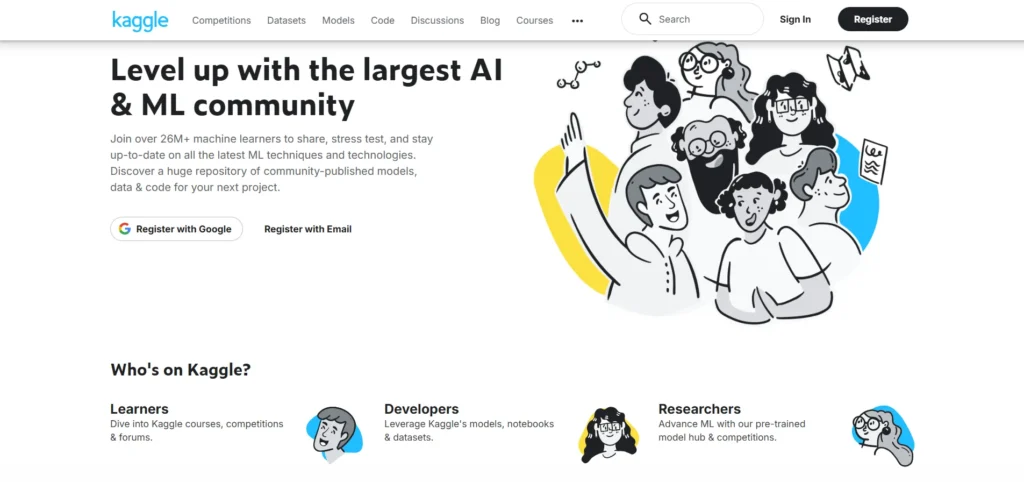
Kaggle is a cloud-based platform that provides a wide array of resources for data scientists and machine learning practitioners. Founded in 2010, Kaggle has become the go-to destination for anyone interested in exploring datasets, participating in data science competitions, or taking machine learning courses. Acquired by Google in 2017, Kaggle continues to grow in popularity and now boasts a community of over 15 million users worldwide.
At its core, Kaggle is a platform where users can access datasets, share code, and compete in data science challenges. It offers a supportive environment for learning, with tools that make it easy to explore and analyze data, build machine learning models, and collaborate with others. Whether you’re just getting started in data science or you’re a seasoned professional, Kaggle provides the resources and tools to help you grow and advance in your career.
The Community Aspect of Kaggle
Kaggle’s community is one of its strongest features. Unlike other platforms where users mostly interact with the content, Kaggle fosters a sense of collaboration and knowledge-sharing. The community consists of people from all over the world, including students, professionals, researchers, and companies.
The Kaggle forums are an active space where users can ask questions, share solutions, and discuss topics related to data science and machine learning. If you’re stuck on a problem, chances are someone in the community has faced a similar issue and can provide valuable insights. The discussions in the forums often lead to new ideas, alternative approaches, and more efficient methods for solving data-related problems.
Beyond the forums, Kaggle encourages collaboration through its competitions. Many Kaggle competitions allow participants to work together in teams, where members can contribute their expertise and learn from one another. This collaborative approach helps create a learning environment where users can expand their knowledge while gaining practical experience.
Another key aspect of Kaggle’s community is the sharing of code and solutions through “Kernels.” These are essentially public code notebooks that users can share with the community, allowing others to learn from their work, offer suggestions, or even build upon it. The open nature of these notebooks creates an environment where knowledge is freely shared, making it easier for everyone to improve their skills.
Key Features of Kaggle
Kaggle’s popularity can be attributed to the numerous features it offers. The platform provides a variety of resources that allow users to learn, practice, and showcase their data science skills. Below, we’ll explore some of the standout features that make Kaggle a go-to resource for aspiring data scientists.
1. Massive Repository of Datasets
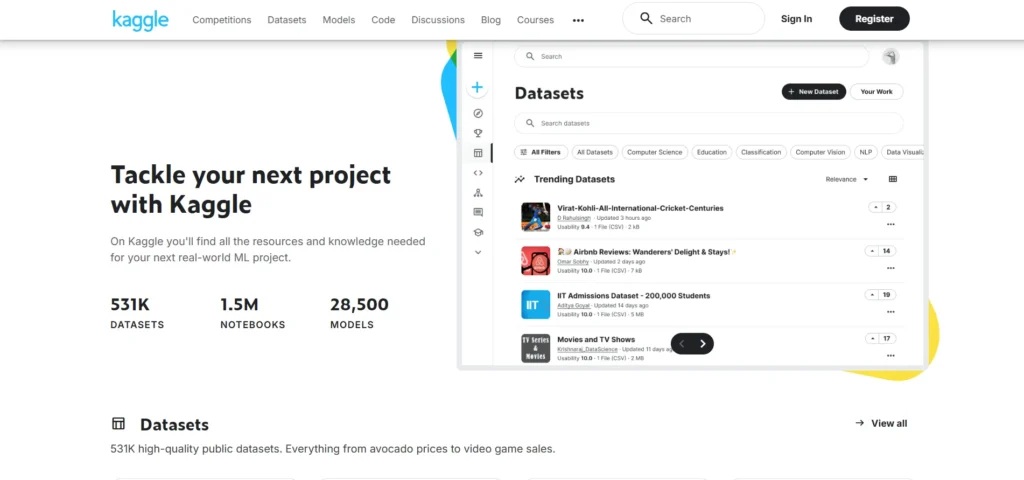
One of the biggest draws of Kaggle is its extensive collection of datasets. The platform hosts datasets across virtually every field imaginable, from healthcare and finance to sports and entertainment. This vast library allows data scientists to experiment with a wide variety of data types and domains.
Datasets on Kaggle are categorized based on their content, size, and purpose, making it easy to find what you need. Whether you’re interested in working with time series data, image data, or text data, you can find datasets that cater to your specific interests. The datasets also come with metadata and descriptions that help users understand the context and structure of the data, making it easier to get started.
Moreover, Kaggle encourages users to explore datasets shared by others. Many datasets come with accompanying code, allowing users to see how others have approached data analysis and machine learning tasks. This transparency makes it easier for beginners to learn from more experienced data scientists and improves the overall learning experience.
2. Jupyter Notebooks for Data Exploration
Kaggle provides a powerful, web-based environment for users to create and run code. The platform uses Jupyter Notebooks, one of the most popular tools in the data science community, to allow users to write and execute Python code. Jupyter Notebooks are interactive, meaning you can run code in small chunks, visualize results, and make adjustments on the fly.
This environment is incredibly user-friendly and eliminates the need for setting up a local development environment. Kaggle’s platform handles all the infrastructure, so you can focus on the problem at hand. Additionally, Kaggle provides free access to high-performance computational resources, including GPUs (graphics processing units) and TPUs (tensor processing units), which are essential for deep learning tasks.
This easy-to-use interface makes Kaggle a great choice for both beginners and advanced users. If you’re new to coding or data science, you don’t need to worry about setting up tools or libraries. If you’re an experienced professional, you’ll appreciate the speed and ease with which you can explore, analyze, and visualize data.
3. Data Science Competitions
Kaggle’s competitions are one of the platform’s most exciting and popular features. These competitions are an excellent way to apply your data science skills to real-world problems. Companies and organizations partner with Kaggle to create competitions that focus on specific challenges, such as improving machine learning models, predicting trends, or optimizing processes.
The competitions are usually structured with a well-defined dataset, a specific problem to solve, and a leaderboard that ranks participants based on the accuracy of their solutions. Prizes are often awarded to the top performers, but even if you don’t win, participating in a competition offers valuable learning experiences.
Competitions can range from beginner-level challenges, where users are given relatively simple problems to solve, to advanced challenges that require complex models and a deep understanding of machine learning techniques. Many top data scientists and companies use Kaggle competitions as a way to discover talent, which makes participating in these events a great way to get noticed in the data science community.
4. Kaggle Courses (Kaggle Learn)
Kaggle Learn is a series of free, self-paced courses designed to help users learn data science and machine learning concepts. These courses are aimed at people with different levels of expertise, from beginners who want to learn the basics to more advanced users who want to specialize in deep learning or reinforcement learning.
The courses on Kaggle Learn are practical and hands-on. They focus on teaching key skills and concepts through interactive lessons and real-world examples. For example, you can learn how to use popular Python libraries like Pandas, NumPy, and Matplotlib to manipulate and visualize data. You can also dive into machine learning algorithms, model evaluation, and feature engineering.
Kaggle Learn offers a great opportunity for users to quickly get up to speed with data science concepts. The short, focused courses allow users to learn at their own pace, making it easy to fit learning into a busy schedule.
5. Kernels (Code Notebooks)
Kernels are Kaggle’s version of code notebooks, where users can write, share, and collaborate on data science projects. They allow users to document their thought process, write code, and showcase solutions to problems. These notebooks are publicly available, which means other users can view them, comment on them, and even fork them to create their own versions.
Kernels are a valuable resource for learning because they provide real-world examples of how to approach data science problems. If you’re unsure about how to tackle a particular problem, you can search for existing kernels on Kaggle and see how other users have approached it. By exploring other people’s code, you can learn new techniques and improve your own coding skills.
The ability to share and collaborate on Kernels is one of the reasons why Kaggle is so appealing to the data science community. It encourages an open exchange of ideas and allows users to learn from one another.
Courses Offered on Kaggle
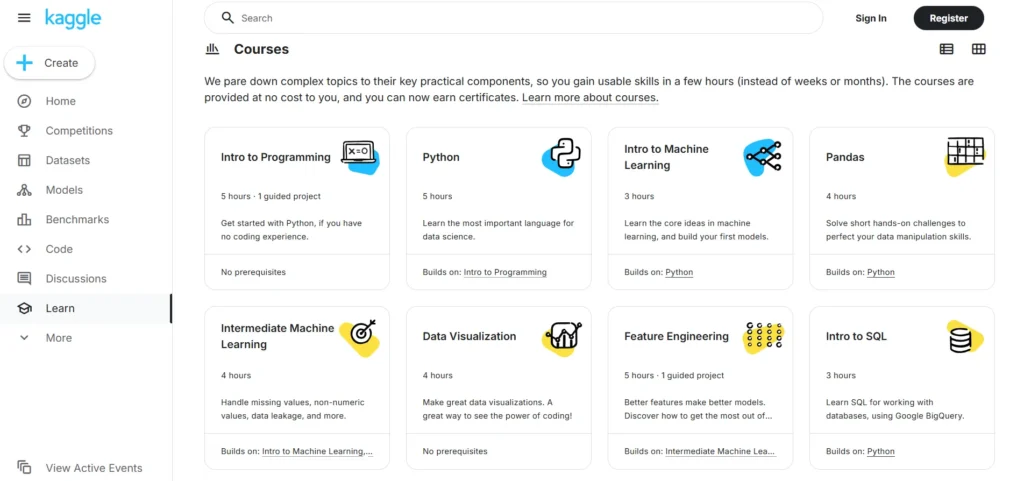
Kaggle offers a wide variety of courses, all available for free. These courses are designed to help you develop your data science skills, whether you’re just starting out or looking to refine your expertise. Some of the most popular courses on Kaggle Learn include:
- Python Programming: A course that covers the basics of Python programming, which is the primary language used in data science and machine learning.
- Intro to Machine Learning: A beginner-friendly course that introduces users to the fundamental concepts of machine learning, including supervised and unsupervised learning.
- Deep Learning: A more advanced course that dives into the world of neural networks and deep learning.
- Data Visualization: A course focused on teaching users how to visualize data effectively using libraries like Matplotlib and Seaborn.
- Feature Engineering: A course that covers how to preprocess and engineer features to improve machine learning models.
Each course includes interactive exercises, real-world examples, and mini-projects to help reinforce your learning. Kaggle Learn offers a practical and efficient way to gain hands-on experience with data science concepts and build a solid foundation for your career.
Pricing of Kaggle
Here’s what you should know about Kaggle’s cost structure:
| Feature / Resource | Cost |
|---|---|
| Account / registration | Free |
| Access to datasets, notebooks, courses | Free |
| Participation in most competitions | Free |
| GPU / TPU usage (in notebooks) | Free (but with usage limits) |
| Private competitions / enterprise features (if applicable) | May involve fees (in special cases) |
To sum up: for most individual users—students, hobbyists, professionals—Kaggle is effectively free.
Pros and Cons of Kaggle
Pros
- Free to Use: All resources on Kaggle, including datasets, courses, and competitions, are free to access. This makes it an incredibly affordable option for anyone interested in data science.
- Comprehensive Dataset Library: Kaggle hosts an extensive library of datasets that cater to virtually every area of data science and machine learning.
- Real-World Competitions: Kaggle competitions allow users to tackle real-world problems, gaining practical experience and building their portfolios.
- Collaborative Community: Kaggle’s community is highly collaborative, allowing users to share insights, code, and solutions to problems.
- Hands-On Learning: Kaggle Learn offers practical, interactive courses that make it easy to gain real-world experience and apply what you’ve learned.
Cons
- Highly Competitive: The level of competition in Kaggle’s challenges can be intimidating, especially for beginners. The top-ranked participants often have extensive experience in the field.
- Quality Variability: Some datasets and kernels may not be well-documented or may require significant cleaning before they can be used effectively.
- Limited Business Context: While Kaggle’s focus on model accuracy is excellent for learning, it may not always align with the real-world business challenges where factors like scalability and interpretability are also crucial.
Conclusion
Kaggle is an incredibly powerful platform for anyone interested in data science. With its vast dataset library, interactive coding environment, and collaborative community, Kaggle offers a comprehensive set of tools that can help you improve your skills, build your portfolio, and gain real-world experience.
Whether you’re just starting out or you’re an experienced data scientist, Kaggle provides the resources you need to grow and succeed. The platform’s free access, hands-on courses, and real-world competitions make it an invaluable resource for anyone looking to advance their career in data science.
FAQs
Is Kaggle suitable for beginners?
Yes, Kaggle offers beginner-friendly courses and datasets that make it easy for newcomers to learn and practice data science.
Do I need to install anything to use Kaggle?
No, Kaggle runs entirely in the browser, so you don’t need to install any software or set up a local development environment.
Can I use Kaggle for commercial projects?
Yes, you can use Kaggle datasets and models for commercial purposes, but be sure to check the licensing terms for each dataset.
How can I participate in Kaggle competitions?
To participate, simply create a free account on Kaggle, browse the ongoing competitions, and start working on the challenges that interest you.
Are there any prerequisites to use Kaggle?
While basic knowledge of Python and data science concepts is helpful, it’s not mandatory. Kaggle Learn offers great resources for getting started.