
In today’s fast-paced world, where technology and data drive almost every industry, learning new skills has become essential for career growth. Online learning platforms like Coursera and DataCamp have emerged as key players in helping individuals acquire relevant knowledge and expertise, especially in fields like data science, programming, and machine learning. But with so many options out there, it can be overwhelming to choose the right one for your needs.
Both platforms are highly regarded in the education space, but they cater to different learning styles and goals. Coursera, founded in 2012 by Stanford professors, partners with top universities and companies to offer a wide range of courses across various disciplines.
From business to humanities, data science, and more, it’s a great option for those seeking a formal, academic approach to learning, including certifications and even degrees from reputable institutions.
On the other hand, DataCamp, which launched in 2013, focuses primarily on data science and analytics. Its hands-on, interactive learning model is tailored for individuals looking to build practical, job-ready skills in data analysis, programming, and machine learning. If you’re someone who prefers to learn through coding exercises and real-world projects, DataCamp could be the right platform for you.
This comparison will explore each platform in detail, highlighting their strengths and weaknesses, to help you decide which one is the best fit for your learning style and career aspirations.
Overview of Coursera and DataCamp
Coursera

Coursera, founded in 2012 by two Stanford professors, offers a vast range of courses, specializations, and degrees in partnership with top universities and organizations worldwide. The platform’s mission is to provide universal access to high-quality education. It covers an array of subjects, including data science, business, humanities, arts, and more. Coursera stands out for its academic and professional focus, offering courses developed by respected universities like Stanford, Yale, and the University of London.
DataCamp
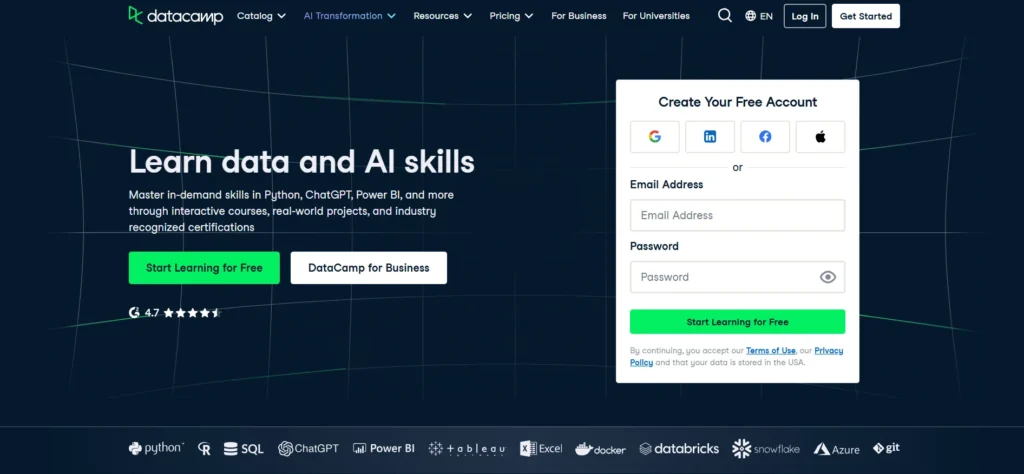
DataCamp, launched in 2013, specializes primarily in data science and analytics. It offers interactive learning in programming languages like Python, R, and SQL, as well as tools and techniques used in machine learning, data visualization, and big data analysis. Unlike Coursera, DataCamp is highly specialized, catering exclusively to individuals pursuing careers in data science, machine learning, or analytics. The platform is known for its hands-on learning approach, which focuses on coding exercises and real-world projects.
Course Offerings and Specializations
Coursera: A Broad Range of Subjects
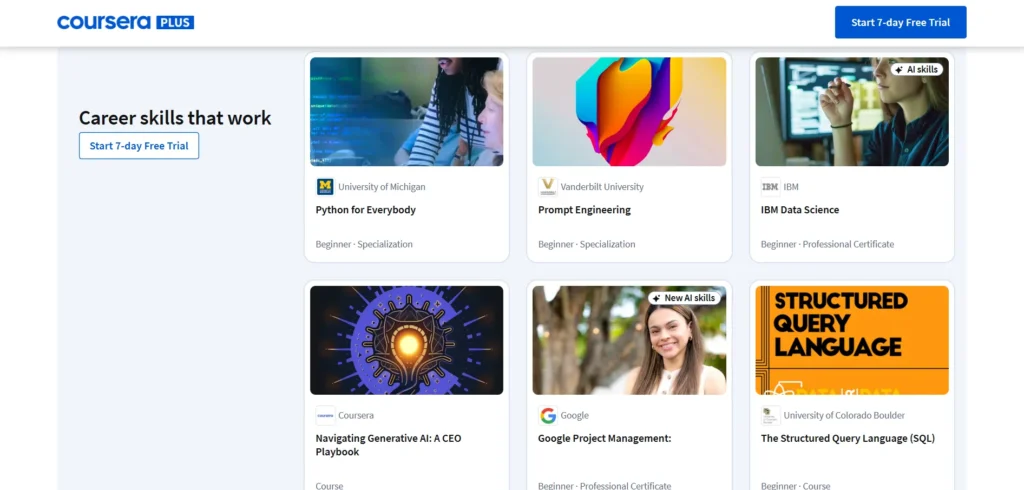
Coursera’s catalog includes thousands of courses across many fields such as computer science, engineering, health, business, social sciences, and even the arts. Whether you’re looking to break into data science or explore marketing, psychology, or finance, Coursera has something for everyone. It offers specialization tracks, Master’s degrees, and even full degrees in partnership with universities. This makes it an ideal platform for those who want a more comprehensive education, with the flexibility to switch between different career paths.
DataCamp: Data Science Focused
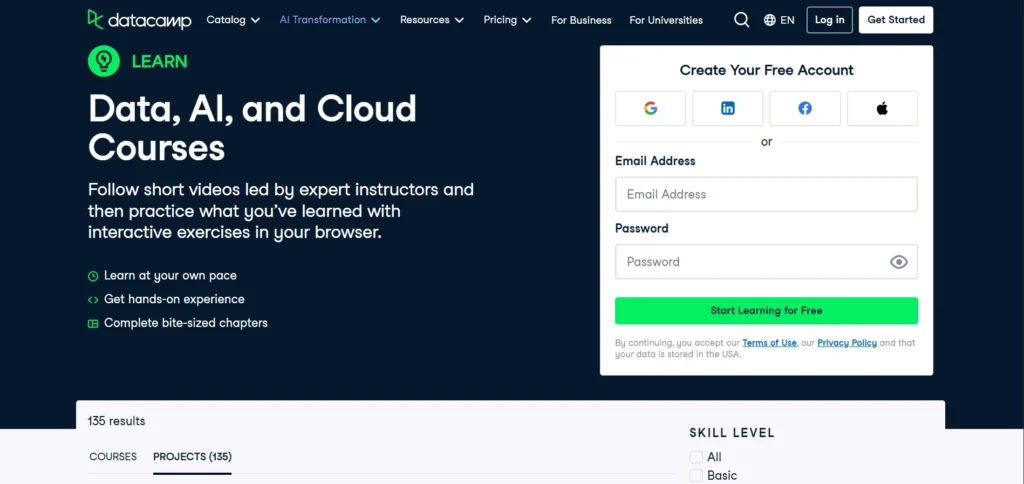
DataCamp’s niche is in data science, so if you are primarily looking to learn programming, data analysis, machine learning, or statistics, DataCamp is perfect for you. It offers specialized courses in areas like Python for Data Science, SQL, R programming, and machine learning. DataCamp’s courses tend to be shorter, focusing on specific topics and real-world applications rather than broad academic theory. It is an excellent choice for learners who want to acquire practical skills quickly in a specialized field.
Learning Experience
Coursera: A Structured, Academic Approach
Coursera offers a more formalized learning experience. Courses often follow a traditional format, including video lectures, readings, quizzes, peer-reviewed assignments, and exams. This structure mirrors the academic approach of universities, and it’s suitable for learners who prefer a methodical approach to mastering a subject. The peer-reviewed assignments encourage deeper thinking and application of concepts, which is beneficial for learners seeking to gain knowledge that’s recognized by academic and professional bodies.
DataCamp: Interactive and Hands-On
DataCamp’s learning experience is much more hands-on and interactive. The platform uses an interactive coding environment where learners write code directly in their browser while they work through lessons. This is perfect for learners who thrive on practical experience. Instead of simply watching videos or reading text, learners can practice immediately, which helps reinforce learning. This approach is ideal for beginners and those who prefer a more engaging, “learn by doing” method.
Pricing
Coursera: A Flexible Pricing Structure
Coursera’s pricing model can vary depending on the course, specialization, or degree program. Most individual courses are free to audit, but to earn a certificate, learners must pay. Specializations and professional certificates generally cost between $39 to $79 per month, with the flexibility to complete courses at your own pace. Coursera’s subscription options for specializations and degrees can be on the higher end of the pricing spectrum, especially when pursuing full degrees or certifications from top universities. While the price may seem high, it offers a more formal and structured educational experience, which can be an investment in your career.
DataCamp: Affordable and Subscription-Based
DataCamp offers a more straightforward pricing model with its subscription system. Users can choose between a basic free plan, which gives access to limited content, and a premium plan costing around $25 per month. The premium plan unlocks all content on the platform, including coding challenges, exercises, and projects. DataCamp’s subscription is far more affordable compared to Coursera’s, making it an excellent option for learners on a budget or those who prefer to pay monthly instead of committing to a full course or degree program.
Certifications
Coursera: Accredited and Recognized Credentials
One of Coursera’s biggest advantages is its accredited certifications. Many of its courses, specializations, and degrees are recognized by top universities and corporations, making them valuable on resumes. If you’re pursuing a career change or looking to enhance your qualifications, Coursera’s certificates carry significant weight. Coursera also offers professional certificates that are recognized by companies, making it easier for you to transition into a new field or advance in your current career.
DataCamp: Practical but Less Formal
While DataCamp offers certificates of completion, they are not as widely recognized as Coursera’s. DataCamp’s certifications are more focused on demonstrating practical skills rather than academic credentials. This can be a great advantage if you’re aiming for hands-on roles like data analysis or software development, where employers value practical skills over formal education. However, if you are looking for a qualification that carries academic weight or industry-wide recognition, Coursera may be a better option.
Pros and Cons
Coursera Pros
- Wide range of subjects: Coursera offers a huge variety of courses, making it suitable for a diverse range of learners.
- Accredited credentials: The platform provides certificates and degrees that are widely recognized by universities and employers.
- Structured learning: Coursera’s academic approach ensures comprehensive and well-organized content.
- Partnerships with top universities: Courses are developed in collaboration with prestigious institutions like Yale, Stanford, and the University of Michigan.
Coursera Cons
- Expensive: Courses and specializations can be costly, especially for full degrees.
- Formal structure: The traditional academic style might not appeal to all learners, particularly those who prefer interactive or informal learning.
DataCamp Pros
- Hands-on learning: DataCamp’s interactive approach allows you to practice coding in real-time, reinforcing learning.
- Affordable: The subscription model makes it a cost-effective way to learn data science.
- Focused on practical skills: DataCamp’s courses are tailored to help you build industry-relevant skills.
DataCamp Cons
- Limited subject range: DataCamp is specialized in data science, so it’s not ideal for learners seeking broader academic knowledge.
- Less formal recognition: DataCamp certificates may not carry the same weight as Coursera’s accredited credentials.
Which Platform Is Right for You?
Industry Credibility and Depth
Coursera offers a broader range of academic credibility and is better suited for learners looking for formal qualifications, especially for career-changing fields. Its degree programs and certificates carry more recognition in the professional world.
DataCamp, however, is perfect for those focused on building practical skills quickly, particularly in data science. It may not offer formal degrees, but its hands-on approach can make you job-ready faster, especially for technical roles.
Hands-On Learning and Real Environments
DataCamp’s interactive platform shines when it comes to practical, hands-on learning. If you learn best by doing, DataCamp is the way to go. Coursera’s formal setup, while comprehensive, doesn’t offer the same level of coding practice or real-time interaction.
Recognition and Career Value
Coursera’s certificates and degree programs hold more weight in terms of formal recognition. If you’re looking to build a strong academic foundation with recognized credentials, Coursera will provide more value. However, for those in data-driven industries, DataCamp’s practical, skill-building approach may prove just as valuable, especially in data science roles.
Focused, High-Quality Content
Both platforms excel in providing high-quality content, but Coursera’s partnerships with top universities give it an edge in academic rigor and breadth. DataCamp, on the other hand, offers specialized content tailored to the needs of data science professionals.
Community and Ecosystem
Coursera has a larger community with university-backed forums and peer interaction, which is beneficial for long-term networking and collaboration. DataCamp’s community is smaller but focused on practical skills, which makes it more niche and specialized.
The Drawbacks
- Coursera can feel too structured or formal for learners looking for quick, hands-on skills, and its pricing may be prohibitive for some.
- DataCamp is limited to data science, and its certificates are not as widely recognized outside the tech industry.
Final Thoughts
Both Coursera and DataCamp are excellent platforms, but they serve different needs. Coursera is ideal for those looking for accredited degrees, broad subject offerings, and a formal learning experience. On the other hand, DataCamp is perfect for those who want to quickly acquire practical, hands-on data science skills without committing to lengthy academic programs.
If you’re aiming for a more traditional academic route with the backing of prestigious universities, Coursera is your best bet. But if you want to dive directly into data science and acquire practical skills in a more affordable and flexible format, DataCamp could be the perfect platform for you.
FAQs
Can I get a job with a DataCamp certificate?
Yes, especially in roles that prioritize practical skills, like data analyst or data scientist.
Are Coursera degrees worth it?
Yes, Coursera’s degrees are accredited and recognized by employers and universities worldwide.
Is DataCamp good for beginners?
Absolutely! DataCamp offers beginner-friendly courses, especially in data science and programming.
How much do Coursera courses cost?
Costs vary. Individual courses can be free, but to earn a certificate, you typically need to pay between $39-$79 per month.
Which platform is better for career growth?
It depends on your goals. Coursera offers formal education with a broader scope, while DataCamp is focused on job-ready skills in data science.