
In 2025, online learning platforms continue to evolve, with Coursera and edX leading the charge in providing high-quality education accessible to anyone, anywhere.
Both platforms have become household names in the world of e-learning, offering courses, certificates, and degree programs that cater to a wide range of learners, from professionals seeking career advancement to individuals exploring new fields.
Coursera, founded in 2012 by Stanford professors, partners with over 300 universities and companies like Google and IBM to offer courses in fields such as technology, business, health, and more. It’s known for its flexible learning options, which include individual courses, specializations, and even full degrees.
The platform is designed to cater to busy professionals who need to balance education with their careers, offering a variety of learning formats and pricing plans.
On the other hand, edX, founded by Harvard and MIT in the same year, is renowned for its academic rigor and its collaborations with prestigious universities worldwide.
It offers an extensive catalog of courses, MicroMasters, and full degrees, with a strong focus on academic depth. edX is often preferred by learners seeking a more structured, university-style education.
This comparison will help you decide which platform is the best fit for your learning goals in 2025.
Overview of Coursera
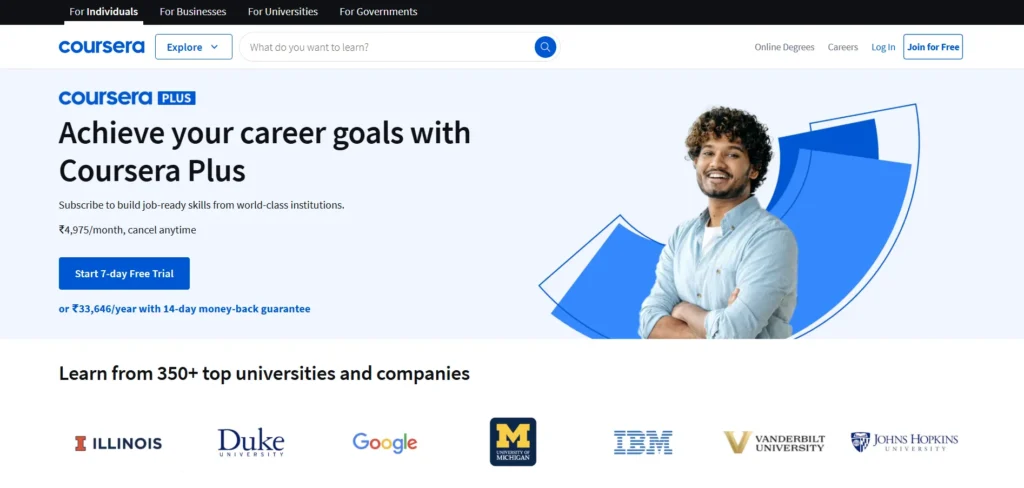
Coursera was founded in 2012 by Stanford University professors Andrew Ng and Daphne Koller. Since its launch, the platform has become one of the most popular online learning platforms globally, partnering with over 300 top universities and companies such as Google, IBM, and Meta.
Coursera offers a wide array of online courses in areas such as business, technology, health, social sciences, and humanities, catering to learners from all backgrounds. The platform also offers professional certificates, specializations, and full degree programs.
Key Highlights of Coursera:
- Course Variety: Coursera offers more than 7,000 courses in fields like data science, computer programming, business management, and personal development.
- Learning Formats: You can find individual courses, specializations (which consist of a series of related courses), professional certificates, and even full degree programs.
- Flexible Learning: Many of Coursera’s courses are self-paced, which allows learners to study at their own pace and fit education into their busy schedules.
- Accreditation and Recognition: Coursera offers accredited certificates, some of which are recognized by leading companies and educational institutions.
Overview of edX
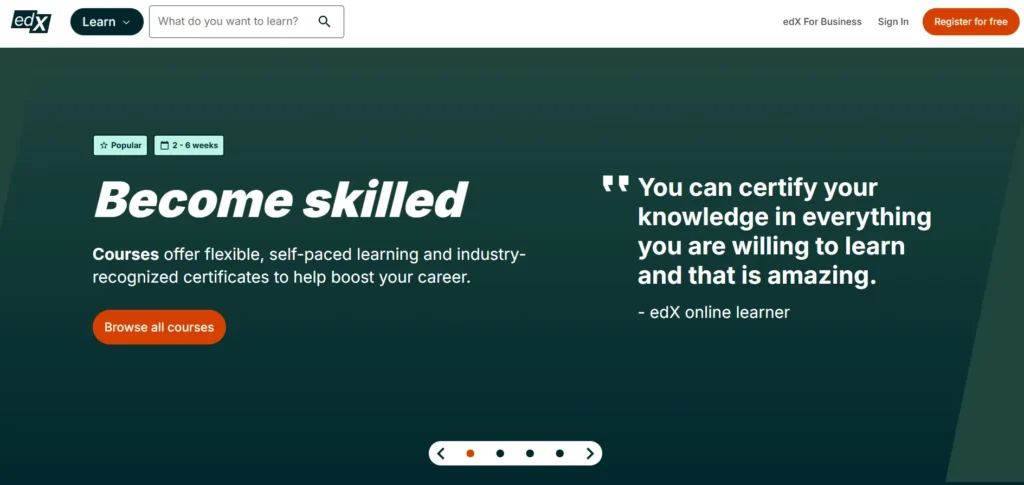
Founded by Harvard University and the Massachusetts Institute of Technology (MIT) in 2012, edX began as a non-profit platform with the goal of offering high-quality education to learners around the world.
Over the years, it has built partnerships with more than 250 universities, including Harvard, MIT, UC Berkeley, and the University of California. edX’s courses span a wide range of subjects, from business and computer science to health and humanities. Like Coursera, it offers certificates, professional credentials, and degree programs.
Key Highlights of edX:
- Course Variety: edX offers over 3,000 courses from top universities and institutions worldwide. It covers a wide range of topics, including computer science, data analysis, business, engineering, and humanities.
- Learning Formats: edX’s courses are offered as individual courses, MicroMasters programs (multi-course credentials), Professional Certificates, and full online degrees.
- Academic Rigor: Many of edX’s courses have a more traditional academic structure with fixed start and end dates, which may be ideal for students who prefer a more structured approach to learning.
- Accreditation and Recognition: edX certificates are highly respected due to their strong academic roots, and some programs offer college credit.
Course Offerings
When it comes to course offerings, both Coursera and edX have a lot to offer. However, their course catalogs and the types of courses available can differ significantly.
Coursera’s Course Catalog
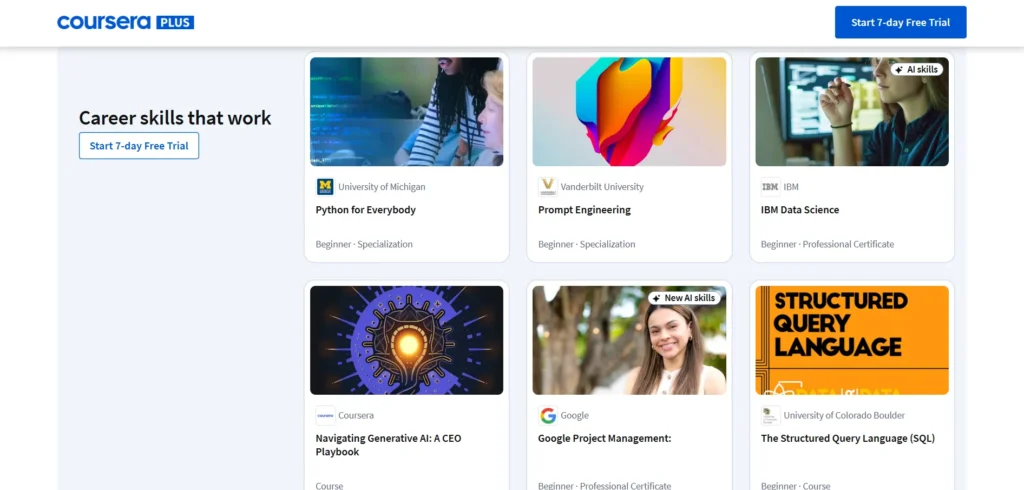
Coursera offers over 7,000 courses, making it one of the largest providers of online education. The platform is known for its wide variety of subjects, from technology and data science to personal development and the arts. Notable programs include:
- Google IT Support Professional Certificate: A beginner-friendly program designed to prepare learners for entry-level IT support roles, with real-world skills and hands-on training.
- IBM Data Science Professional Certificate: A comprehensive program that covers data analysis, visualization, and machine learning, perfect for anyone looking to break into the data science field.
- Meta Front-End Developer Certificate: A series of courses that focus on web development using HTML, CSS, and JavaScript, providing the skills needed for front-end web development.
What sets Coursera apart is its collaboration with top universities like Stanford, Yale, and the University of Michigan. This partnership ensures that the courses are of high academic quality and often include practical, industry-relevant skills.
edX’s Course Catalog
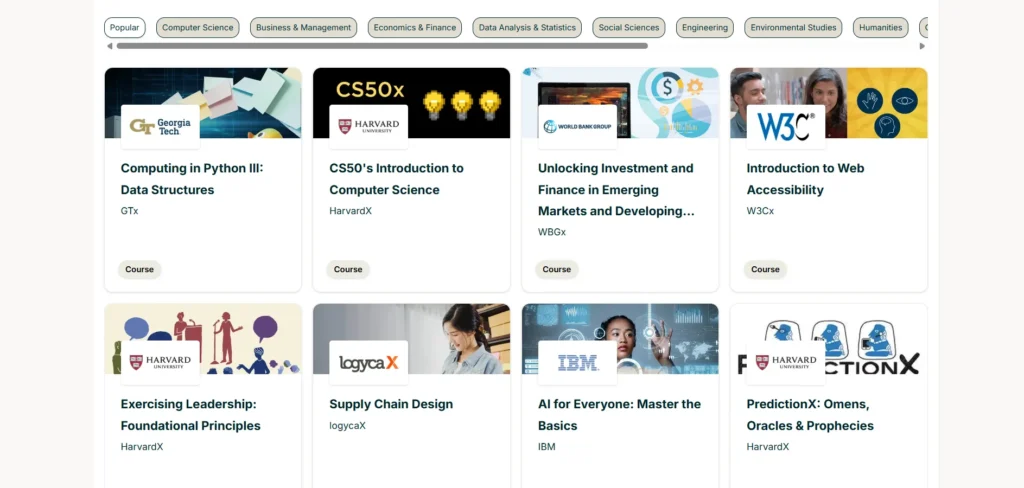
While edX has a smaller course catalog, with approximately 3,000 courses, it is known for offering more academic and research-driven courses. edX collaborates with top universities like MIT, Harvard, and UC Berkeley to provide high-level content that is often geared toward advanced learners or those interested in pursuing a deeper understanding of a subject.
Some of the popular courses and programs offered on edX include:
- CS50’s Introduction to Computer Science (Harvard): One of the most popular online computer science courses, offering a deep dive into programming and computer science fundamentals.
- MicroMasters in Data Science (UC San Diego): A rigorous series of graduate-level courses designed to equip learners with the skills necessary for data science roles.
- Agile Project Management (University of Maryland): This professional certificate covers key agile methodologies, ideal for those pursuing careers in project management.
Unlike Coursera, which often offers shorter courses, edX’s MicroMasters and Professional Certificate programs are designed to provide in-depth knowledge and prepare learners for advanced roles in their chosen fields.
Pricing and Financial Aid
Coursera Pricing
Coursera uses a variety of pricing models, depending on the course or program type. Here’s a breakdown of their pricing:
- Individual Courses: Prices typically range from $39 to $99 per course, though some specializations and professional certificates may be priced higher.
- Specializations: These are monthly subscriptions that range from $39 to $79, and the duration varies from one to several months.
- Coursera Plus: For $399 per year, learners can access most of Coursera’s courses, including specializations and certificates.
- Degree Programs: Coursera also offers full online degrees in partnership with universities like the University of Illinois, and prices vary by program. For example, the University of Illinois offers an online MBA for about $22,000.
Coursera also offers financial aid for learners who meet certain criteria, making it more affordable for those in need.
edX Pricing
edX operates on a similar pricing model, but it offers some different options:
- Individual Courses: Prices typically range from $50 to $300 per course. These courses are often shorter and focused on specific skills.
- MicroMasters Programs: These programs typically cost between $600 and $1,500 and provide an advanced credential in a specialized area like data science or artificial intelligence.
- Professional Certificates: Prices for these programs vary by program but typically range between $100 and $1,000.
- Degree Programs: edX offers full degree programs in partnership with universities like the University of Arizona and prices vary. For example, an online Master’s in Computer Science from the University of Arizona costs about $10,000.
edX also provides financial aid through its Financial Assistance Program, which offers up to 90% off course fees for eligible learners.
Customer Support, Quality Control & User Experience
Both platforms provide strong customer support through help centers, discussion forums, and email. Coursera offers a more intuitive user experience with its easy navigation and mobile app. edX’s interface is simple but can be less intuitive. Both platforms maintain high-quality, regularly updated course content.
Coursera Customer Support & Platform Experience
Coursera provides multiple avenues for customer support. Learners can find help through the following options:
- Help Center: Coursera’s help center includes FAQs, troubleshooting guides, and instructions on how to navigate the platform.
- Community Forums: Learners can interact with one another in the platform’s forums, where they can ask questions, share insights, and find peer support.
- Email Support: If learners need personalized assistance, they can contact Coursera’s support team via email.
Coursera’s platform is highly intuitive, offering easy navigation and a mobile app for on-the-go learning. It is designed for a smooth learning experience, with video lectures, quizzes, and hands-on projects all integrated into the platform.
edX Customer Support & Platform Experience
edX also provides a robust support system for its learners:
- Help Center: edX’s help center includes FAQs, troubleshooting guides, and information on technical support.
- Discussion Forums: Learners can engage with instructors and peers through the platform’s discussion boards, which is especially useful for academic courses.
- Email Support: Learners can reach out to edX’s support team directly for personalized assistance.
The edX platform offers a straightforward user interface, though some learners find it less intuitive than Coursera. It’s structured in a way that is ideal for academic learners who prefer a more traditional online learning experience, but it may take a little getting used to for beginners.
Quality Control, Instructor Consistency, and Content Refresh
Both Coursera and edX maintain high standards for the quality of their courses, but the platforms approach this differently:
- Coursera: Coursera works with top-tier universities and companies to offer courses that are updated regularly. They ensure the content is practical and industry-relevant, especially in fields like technology and business.
- edX: edX’s courses tend to have a more academic focus, with a strong emphasis on research and theory. Because of its partnership with prestigious universities, edX’s courses tend to be academically rigorous and are regularly refreshed to stay relevant.
Employer Recognition, Certificates, and Real-World Value
Coursera offers certificates recognized by industry giants like Google and IBM, making them highly valuable for career advancement. edX provides academically rigorous certificates backed by top universities, ideal for those seeking deep knowledge or academic credentials. Both platforms offer certificates that enhance employability and real-world value.
Coursera’s Strengths in Recognition
Coursera’s certificates are highly regarded in the job market, especially for professional development. Its collaboration with companies like Google, IBM, and Meta means that many of Coursera’s professional certificates are designed with direct input from employers, ensuring that the skills you learn are in demand.
For example, the Google IT Support Professional Certificate is recognized by top tech companies, and many job seekers have used it as a springboard to enter the IT field.
edX’s Strengths in Recognition
edX’s certificates are more academically focused, and many are issued by some of the world’s leading universities. Programs like CS50 from Harvard are highly respected and often used as a credential for further academic study or as a signal of academic rigor to employers.
Because edX’s courses are designed in collaboration with universities, the platform is better for learners seeking deep, specialized knowledge that could lead to academic advancement or highly skilled roles in fields like engineering and data science.
Final Verdict & Comparison Summary
Comparison Summary
| Feature | Coursera | edX |
|---|---|---|
| Course Variety | Over 7,000 courses | Over 3,000 courses |
| Learning Formats | Self-paced, Specializations, Degrees | MicroMasters, Professional Certificates, Degrees |
| Pricing | $39–$99 per course; $399/year for Coursera Plus | $50–$300 per course; $600–$1,500 for MicroMasters |
| Certification | Industry-recognized | University-backed |
| Financial Aid | Available | Available |
| Ideal For | Career advancement, flexible learning | Academic depth, structured learning |
Verdict
Ultimately, your choice between Coursera and edX will depend on your specific goals:
- Choose Coursera if you’re looking for career-focused courses with industry recognition. Coursera’s flexible learning options, industry-aligned content, and professional certificates are perfect for those looking to upskill or switch careers.
- Choose edX if you want a more academic, structured learning experience with in-depth knowledge. edX is ideal for learners pursuing advanced credentials or those who want to deepen their expertise in a specific field, particularly in areas like computer science or engineering.
FAQs
Which platform offers more courses?
Coursera offers more courses, with over 7,000 compared to edX’s 3,000.
Are the certificates from both platforms recognized?
Yes, both platforms offer certificates recognized by employers and universities. Coursera’s certificates are more industry-focused, while edX’s are more academically oriented.
Can I access courses for free?
Both platforms allow you to audit courses for free, but you’ll need to pay if you want a certificate.
Which platform is better for career changers?
Coursera is better suited for career changers due to its industry partnerships and practical, hands-on courses.
Which platform is better for academic learners?
edX is ideal for learners who want a more traditional, academic approach with in-depth content and the potential for academic credit.