
In the rapidly evolving world of data science, finding the right platform to learn can feel overwhelming. Among the many options, DataCamp has made a name for itself as a go-to resource for aspiring data scientists, programmers, and analysts.
But with the constant changes in technology, the question arises—Is DataCamp still the best platform to learn data science online in 2025?
Let’s dive into a detailed review of DataCamp’s features, courses, pricing, and more, to see if it’s worth your time and investment in 2025.
Overview of DataCamp
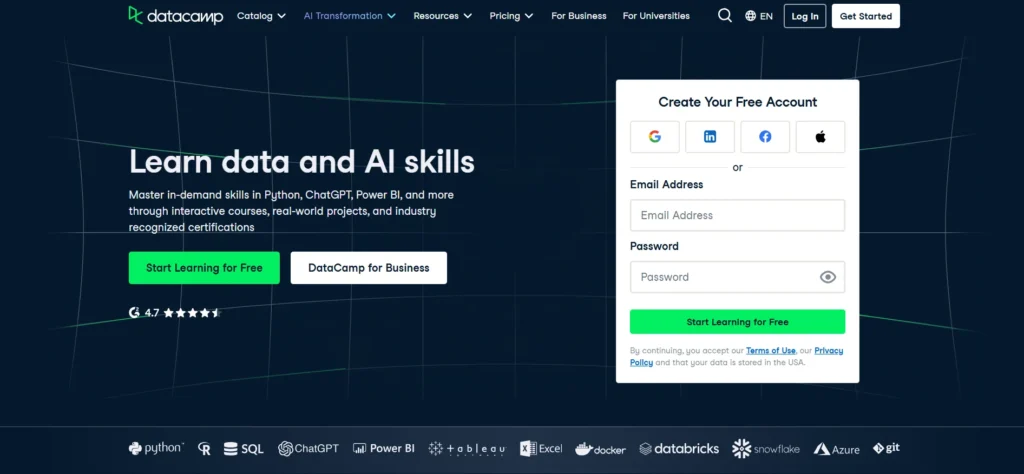
Founded in 2013, DataCamp is a leading online platform dedicated to teaching data science and related skills. It offers a range of courses that cover everything from programming languages like Python and R to more advanced topics like machine learning, data visualization, and data engineering. The platform is known for its hands-on, interactive learning style, which sets it apart from other online learning platforms.
DataCamp has continued to evolve over the years, introducing new features and content that reflect the growing demand for data professionals. In 2025, the platform still holds a strong reputation for delivering high-quality learning experiences.
Key Features of DataCamp
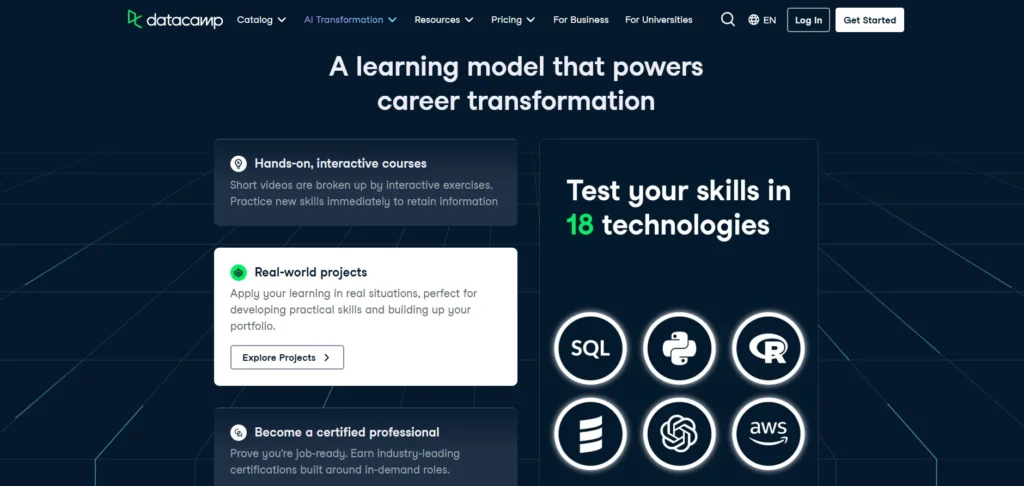
DataCamp offers several features that make it a popular choice for online learners. Let’s take a closer look at some of the key aspects that make the platform stand out:
1. Interactive Learning
One of DataCamp’s standout features is its interactive learning style. Unlike traditional video-based courses, DataCamp incorporates coding exercises directly into the lessons. This hands-on approach allows you to learn by doing, which is crucial for mastering programming languages and data science concepts. You can write code directly in the browser, get instant feedback, and move forward at your own pace.
2. Personalized Learning Paths
DataCamp offers personalized learning paths based on your goals and current skill level. Whether you’re a beginner or an experienced professional, the platform suggests a tailored curriculum to guide your learning journey. This ensures you’re learning what’s most relevant to your career or project goals, saving time and boosting efficiency.
3. Real-World Projects
The platform goes beyond theory and lets you work on real-world projects. This feature is key for learners looking to apply their skills in practical scenarios. DataCamp’s projects range from simple data analysis tasks to more complex machine learning challenges, which helps you build a robust portfolio to showcase your abilities.
4. Courses by Experts
DataCamp collaborates with industry experts and well-known professionals in the data science field to create its courses. This ensures that the content is not only relevant and up-to-date but also reflects real-world practices. Learning from experienced instructors adds credibility and depth to the material.
5. AI-Powered Assistance
In 2025, DataCamp has incorporated AI-powered tools to enhance the learning experience. These tools provide instant help with coding challenges, suggest improvements, and even analyze your performance to offer personalized recommendations for further study. This AI support can make the learning process smoother and more efficient.
6. Flexible Learning Options
Whether you prefer to learn on the go or need a more structured approach, DataCamp offers flexibility. You can access the platform anytime, anywhere, on desktop or mobile. There are also options for learning at your own pace or joining a more structured bootcamp-style experience. This adaptability makes DataCamp suitable for learners with different preferences and schedules.
Courses Offered on DataCamp
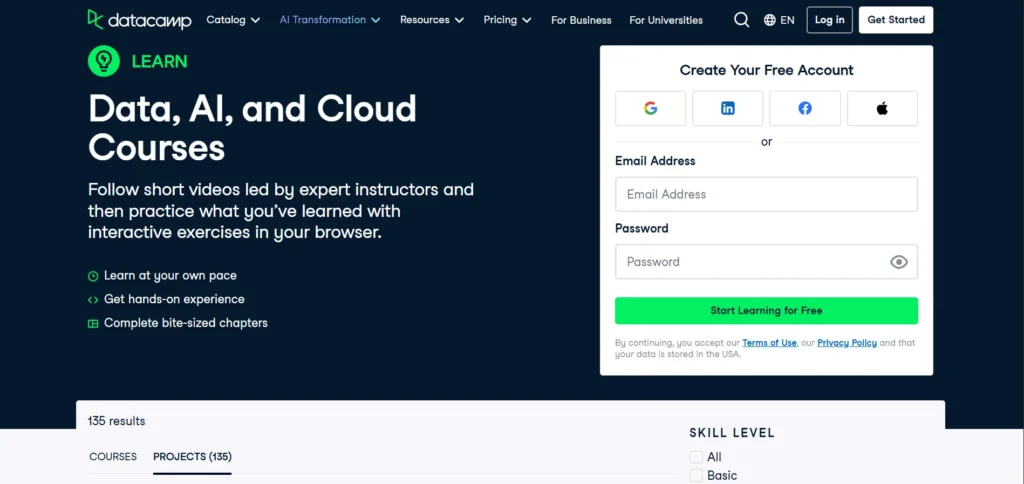
DataCamp offers an extensive range of courses in various aspects of data science and programming. Here’s a breakdown of some of the most popular categories:
1. Programming Languages
DataCamp provides courses on several programming languages commonly used in data science. Whether you want to learn Python, R, or SQL, DataCamp offers beginner-friendly courses that start from the basics and gradually progress to advanced concepts. These courses are designed to get you coding and solving problems right away.
2. Data Analysis & Visualization
Data analysis and visualization are at the core of data science. DataCamp offers a range of courses to help you master these skills. You’ll learn how to manipulate datasets, draw meaningful insights, and create visually appealing reports and dashboards. Popular tools covered include pandas, matplotlib, and Tableau.
3. Machine Learning & AI
As machine learning and artificial intelligence continue to shape industries worldwide, DataCamp offers numerous courses in these fields. You’ll learn how to build machine learning models, apply AI algorithms, and tackle real-world problems. Whether you’re interested in supervised learning, unsupervised learning, or deep learning, DataCamp provides courses to suit all interests.
4. Business Intelligence & Data Tools
For professionals who need to turn data into actionable insights, DataCamp offers courses in business intelligence and data tools. You can learn to use platforms like Power BI, Excel, and Hadoop to analyze and visualize business data. These courses are geared towards individuals in business roles looking to add data science to their skillset.
5. Data Engineering
Data engineering is an essential part of the data science pipeline. DataCamp offers courses that teach you how to work with big data tools, databases, and cloud computing platforms. These courses are ideal for those looking to pursue a career in data engineering, a field that continues to grow in importance.
Pricing Plans
DataCamp offers a variety of pricing plans to cater to different types of learners, from casual learners to enterprise teams. Here’s an overview of the available plans:
Free Plan (Basic)
DataCamp offers a free plan with limited access to content. While you can explore some introductory courses and lessons, the free plan is quite basic and doesn’t include full access to DataCamp’s course library or the interactive coding environment. It’s a great way to get started and see if the platform fits your needs before committing to a paid plan.
Premium (Individual)
The Premium plan is ideal for individuals who want full access to DataCamp’s courses and features. Priced at around $25 per month (billed annually), it includes unlimited access to the entire course library, hands-on coding exercises, and real-world projects. Premium users also get access to personalized learning paths and other advanced features, such as AI-powered assistance.
Teams Plan
DataCamp also offers a Teams plan for small to medium-sized organizations. This plan includes all the features of the Premium plan, along with additional tools for team management, progress tracking, and collaboration. The Teams plan is great for companies looking to upskill their workforce in data science.
Enterprise Plan
For large organizations or educational institutions, DataCamp’s Enterprise plan offers customized solutions. This plan includes everything in the Teams plan, with additional administrative tools, custom content, and dedicated support. The Enterprise plan is tailored to meet the needs of larger teams and institutions.
Pros of Using DataCamp
- Interactive Learning: DataCamp’s hands-on approach to learning by doing is a major advantage. You get to write code and receive immediate feedback, which is crucial for mastering programming skills.
- Expert-Led Courses: DataCamp collaborates with industry experts to create its courses, ensuring the material is relevant and up-to-date.
- Personalized Learning Paths: Tailored courses based on your goals and skill level help ensure you’re learning the right material.
- Real-World Projects: The ability to work on real-world projects gives you the practical experience needed to excel in the job market.
- AI-Powered Assistance: The inclusion of AI tools makes learning smoother and more efficient.
Cons of Using DataCamp
- Limited Free Content: While DataCamp offers a free plan, it’s quite limited. To access most of the content and features, you’ll need to opt for the Premium plan.
- Not Deep in Some Areas: While DataCamp offers a broad range of topics, some advanced subjects may not go as deep as other platforms or specialized programs.
- Subscription Cost: For those looking for a one-time purchase option, the subscription-based pricing model may not be ideal. The Premium plan can add up over time.
Conclusion: Is DataCamp Worth It?
Overall, DataCamp continues to be a top contender in the world of online data science education in 2025. Its interactive learning style, expert-led courses, and real-world projects make it a valuable platform for anyone looking to break into the field of data science. Whether you’re a beginner or an experienced professional, DataCamp offers courses that can help you advance your career.
If you’re committed to learning and prefer a hands-on, interactive approach to coding and data science, DataCamp is definitely worth considering. While the pricing may not be the cheapest, the quality of content and the variety of features available make it a worthwhile investment for serious learners.
FAQs
Is DataCamp good for beginners?
Yes, DataCamp offers beginner-friendly courses, especially in programming languages like Python, R, and SQL. It’s designed to help learners of all skill levels progress at their own pace.
Does DataCamp offer certificates?
Yes, upon completing courses, DataCamp provides certificates that you can add to your LinkedIn profile or resume.
Can I access DataCamp courses on mobile?
Yes, DataCamp has a mobile app that allows you to access courses and lessons on the go.
How much does DataCamp cost?
DataCamp offers a free plan with limited access, and the Premium plan is priced around $25 per month when billed annually.
Does DataCamp offer real-world projects?
Yes, DataCamp offers real-world projects in various topics, such as data analysis, machine learning, and business intelligence.