
Online learning is booming, and two names often stand out: Skillshare and MasterClass.
Both promise easy access to video lessons and expert teachers. But beneath the surface, they serve different purposes and suit different kinds of learners.
In this comparison, we’ll explore everything you need to know — from pricing and teaching style to course quality and value — to help you decide which one is worth your time and money.
1. What Are Skillshare and MasterClass?
Skillshare in a Nutshell
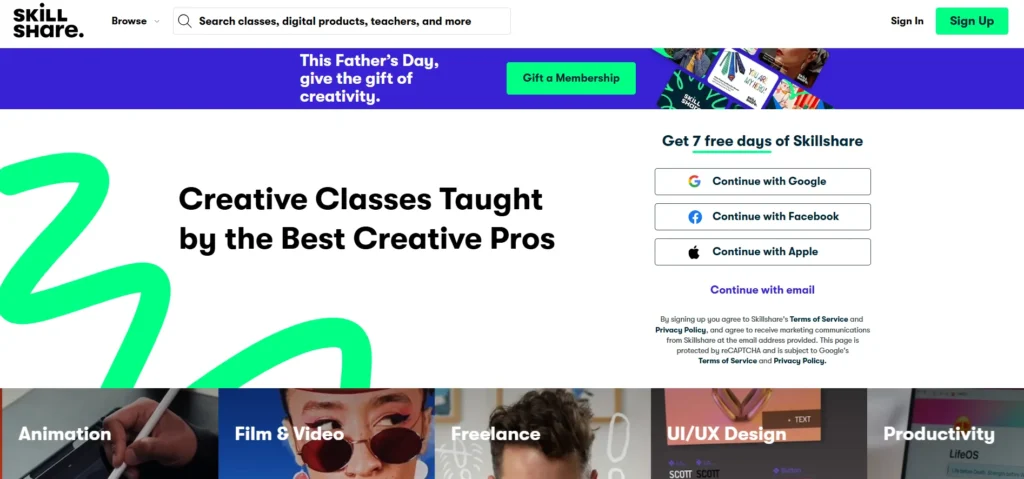
Skillshare is an online learning platform that runs on a subscription model. You pay a single fee — monthly or annually — and get unlimited access to thousands of short video classes.
It’s built around creative, business, and personal development topics, such as:
- Illustration and digital painting
- Photography and video editing
- Freelancing and productivity
- Design, marketing, and writing
Most Skillshare classes are project-based. You watch lessons, complete small tasks, and share your project with the community. This “learn by doing” approach makes Skillshare feel hands-on and community-driven.
It’s not an academic or accredited platform, but it’s practical. You won’t get a certificate that counts toward a degree, but you will gain skills you can apply right away.
MasterClass in a Nutshell
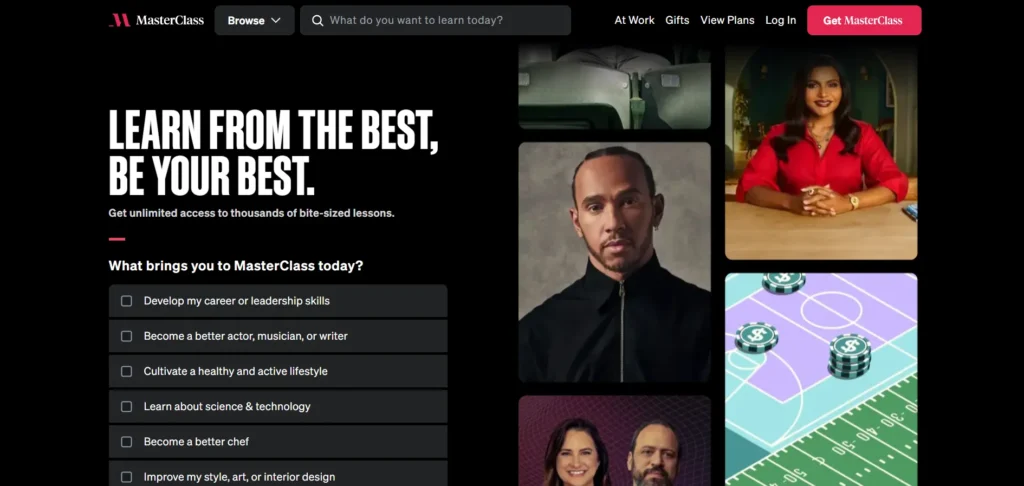
MasterClass takes a very different approach. It’s built around high-profile instructors — the “masters” of their fields.
You’re not just learning how to cook, you’re learning from Gordon Ramsay. You’re not just taking a writing class, you’re learning from Margaret Atwood.
Each course feels like a beautifully produced documentary. The videos are cinematic, the lessons are carefully structured, and the instructors talk about their mindset, craft, and creative process.
It’s less about “do this step” and more about how the best in the world think and work.
MasterClass isn’t meant for certification either — it’s about inspiration, creativity, and perspective.
2. Course Quality and Depth
Skillshare: Wide Range but Varying Depth
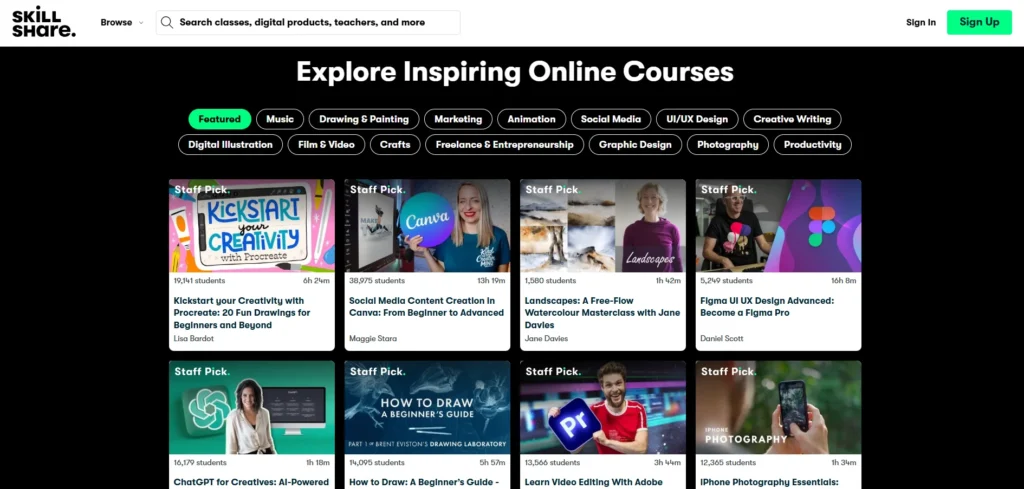
Skillshare’s biggest strength is its massive class library. There are tens of thousands of classes taught by real working professionals, freelancers, and educators.
Because anyone can apply to teach, quality varies. Some instructors are excellent, while others are less experienced. The upside is variety — you can find niche topics that wouldn’t appear on other platforms.
Most Skillshare classes are short (30 minutes to two hours) and focus on beginner to intermediate levels. Advanced technical courses exist but are less common.
The lessons are clear, practical, and structured to get you creating quickly. Many include projects such as:
- Designing a logo
- Editing a short video
- Writing a blog post or short story
It’s very “get your hands dirty” learning. If you like doing rather than just watching, Skillshare will feel satisfying.
The downside is that some classes may feel repetitive or shallow. You may need to combine several to gain deeper mastery.
MasterClass: High Quality, Less Hands-On
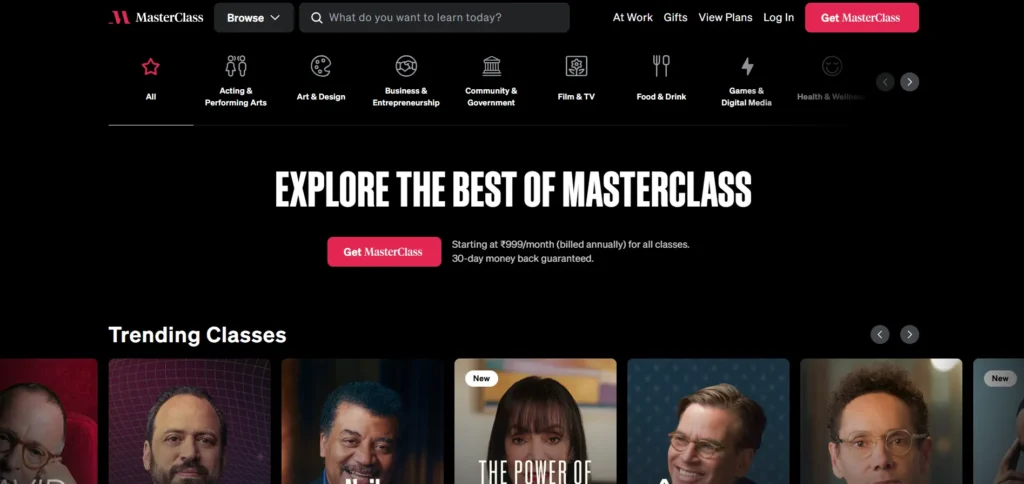
MasterClass shines in its production value. Every video looks and sounds like a professional documentary — crisp cinematography, music, and thoughtful pacing.
The instructors are leaders in their craft: world-famous chefs, authors, actors, athletes, directors, scientists, and business icons. That gives each lesson a sense of authority and inspiration.
But the learning style is different. Instead of short, task-driven lessons, you get longer conceptual sessions — stories, reflections, strategies, and behind-the-scenes insights.
You’ll learn how Serena Williams approaches practice or how Martin Scorsese tells a story, but you won’t have interactive assignments.
In short:
- Skillshare = do this, make this, share this.
- MasterClass = listen, observe, reflect, apply it your own way.
Both are valuable — just different kinds of learning.
3. Pricing and Value
Skillshare Pricing
Skillshare works on a subscription basis. You can pay monthly or yearly, with the annual plan being the best value.
- Monthly plan: around $29 per month
- Annual plan: around $165 per year (averaging $13.99/month)
- Free trial: usually one month for new users
Once subscribed, you can watch as many classes as you want. You can explore hundreds of topics without paying per course.
Skillshare’s value comes from how much you use it. If you’re an active learner, the cost is well worth it. But if you only plan to take one or two classes, it may not feel as valuable.
MasterClass Pricing
MasterClass also offers subscription access — no individual course purchases. It’s usually paid annually, with three tiers that differ based on how many devices can stream at once or whether you can download lessons for offline use.
- Individual plan: about $120 per year
- Duo plan: about $180 per year
- Family plan: about $240 per year
Every plan gives you access to the full library of 200+ courses.
The main difference lies in device access and download options.
Because of its premium production and celebrity teachers, the cost per class feels higher — but you’re paying for a “luxury” learning experience.
Value Comparison
- Skillshare is best if you want affordable, practical, hands-on learning across many subjects.
- MasterClass is best if you want polished storytelling and inspiration from world-class figures.
- In both cases, the value depends on your usage. Watching one or two classes a year isn’t worth the cost — consistency matters.
4. Learning Style and Experience
Learning on Skillshare
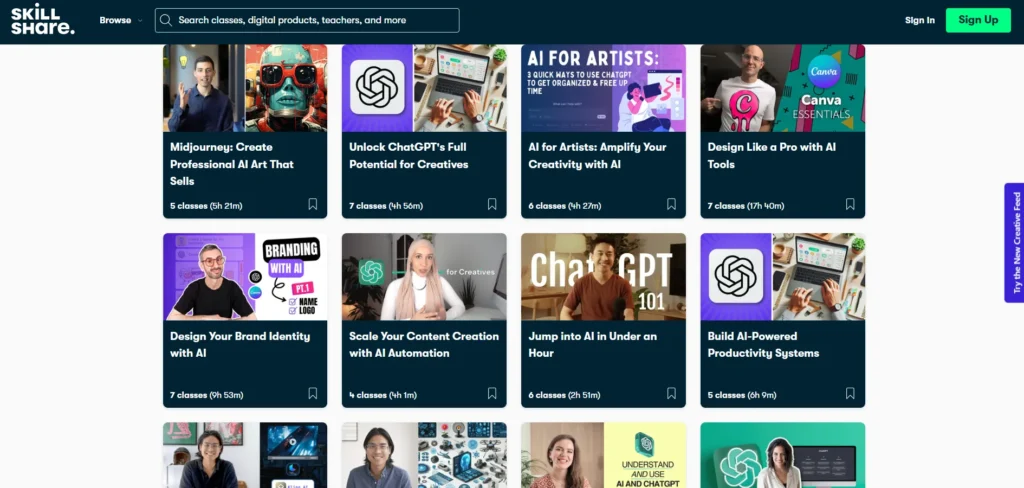
Skillshare feels like a creative studio full of mentors. You explore classes by topic, watch short videos, complete projects, and can share your work with other students. The interface is easy to use, and lessons are divided into small chunks, so it’s convenient for quick learning sessions.
Many classes encourage participation. The community feature allows students to post projects, comment, and get feedback. That sense of belonging motivates people to keep learning.
It’s flexible and self-paced. You can start multiple classes, jump between topics, or take a short break and resume anytime.
However, it can be overwhelming at first. With so many instructors, finding the right class sometimes takes effort.
Learning on MasterClass
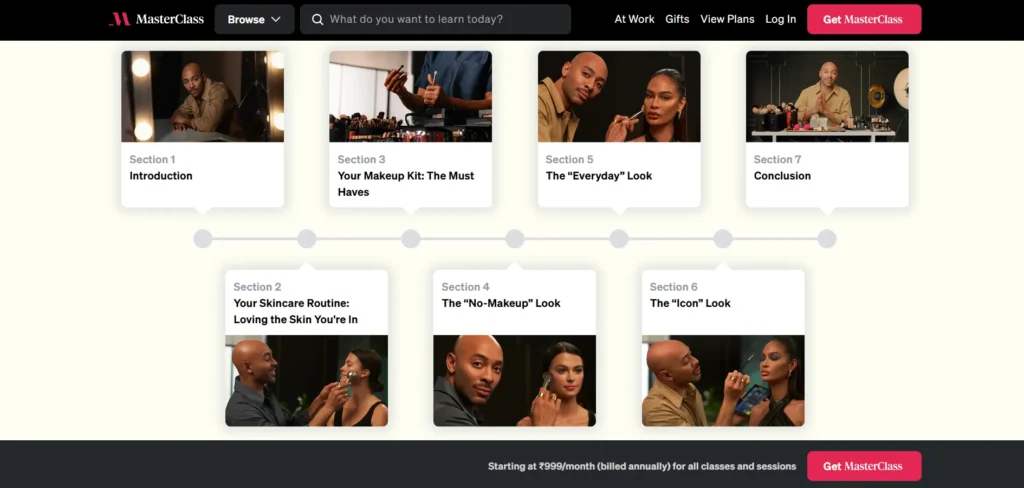
MasterClass feels like sitting down with a master and listening to their wisdom. The tone is personal and inspiring, more like mentorship than formal instruction.
The experience is immersive. The video quality makes you feel like you’re part of a documentary. Lessons are usually between 10–25 minutes long, bundled into multi-lesson courses that add up to several hours.
Some classes come with workbooks or optional assignments, but the core is storytelling and thought process. You’re absorbing the mindset of success rather than completing structured exercises.
There’s little community engagement — it’s primarily a solo learning experience. But for many, that’s part of the charm. It’s calm, cinematic, and motivating.
5. Topics and Breadth of Content
What You’ll Find on Skillshare
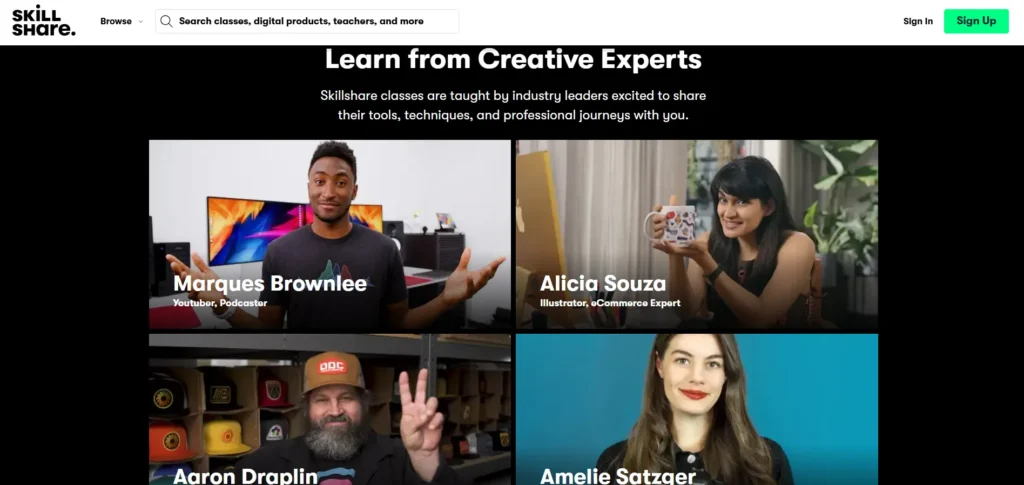
Skillshare’s categories include:
- Design, illustration, photography, animation
- Film, video, and music production
- Freelancing and entrepreneurship
- Marketing, business, and productivity
- Lifestyle and personal growth
You can find practical, everyday skills alongside creative ones — everything from “How to Start a Freelance Business” to “Watercolor Painting for Beginners.”
It’s particularly strong in visual, creative, and self-improvement fields. You can start from zero in one area, then move into another easily because the platform is built for exploration.
What You’ll Find on MasterClass
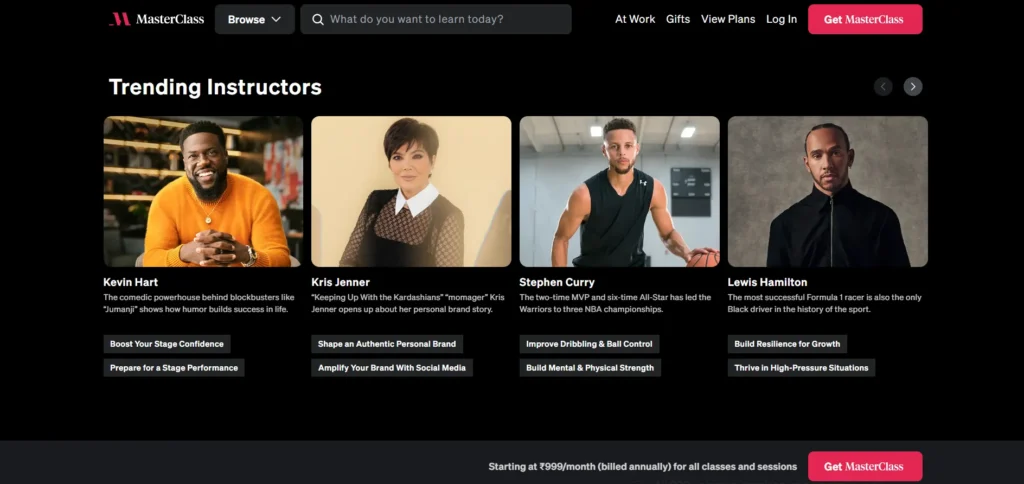
MasterClass focuses on creative excellence and personal mastery. The topics are grouped into categories such as:
- Food, cooking, and wine
- Writing and storytelling
- Film, TV, and acting
- Music and entertainment
- Business, leadership, and innovation
- Science and technology
- Sports and wellness
You might learn screenwriting from Aaron Sorkin, leadership from Howard Schultz, or cooking from Gordon Ramsay. The content is curated — fewer classes than Skillshare, but more depth and polish in presentation.
It’s about learning from icons, not from general educators. If that excites you, the platform feels special.
6. Certificates and Career Benefits
Neither platform offers formal certificates or academic credentials.
Their focus is on skills and mindset, not degrees.
Skillshare and Career Growth
Even without certification, Skillshare can still boost your career because it helps you build a tangible portfolio. You can show work you’ve created in class — logos, videos, illustrations, photography projects — as real evidence of skill.
It’s great for freelancers, creatives, or entrepreneurs who need practical abilities rather than diplomas.
MasterClass and Professional Value
MasterClass won’t give you a portfolio or credential either, but it can broaden your understanding of excellence. Learning from masters can influence how you think, communicate, and create.
It’s ideal for professionals who already have skills and want to refine their mindset — people in leadership, creative industries, or anyone who values lifelong learning.
7. Strengths and Weaknesses Summary
Skillshare Strengths
- Thousands of classes in many categories
- Hands-on projects and real application
- Affordable for active learners
- Encourages exploration and creativity
- Strong community features
Skillshare Weaknesses
- Quality varies across instructors
- Depth is limited in some topics
- Can be overwhelming to navigate
- No formal certification
MasterClass Strengths
- Exceptional instructors who are world leaders in their fields
- High production value and inspiring content
- Deep insight into creativity and mindset
- Easy-to-follow video format
MasterClass Weaknesses
- Less interactive and hands-on
- No certification or portfolio output
- More expensive for occasional learners
- Smaller range of topics overall
8. Which Platform Suits Which Learner?
| Learning Goal | Best Choice | Why |
|---|---|---|
| Learning new creative skills (design, illustration, photography) | Skillshare | Practical, project-based, wide range of beginner-friendly classes |
| Building a side hustle or improving business skills | Skillshare | Affordable, flexible, focused on freelancers and entrepreneurs |
| Gaining insight from top professionals | MasterClass | High-profile teachers, inspiring real-world lessons |
| Seeking inspiration or creative motivation | MasterClass | Beautifully made courses that spark ideas |
| Looking for step-by-step technical guidance | Skillshare | More task-oriented and hands-on |
| Wanting deep conceptual understanding | MasterClass | Excellent for strategic, creative, and mindset learning |
| Needing certificates or job-oriented credentials | Neither | Both are skill-focused rather than accredited |
| Exploring hobbies and self-development | Skillshare | Wide, affordable range and beginner-friendly content |
9. Pros, Cons, and Practical Scenarios
If You’re a Beginner
Skillshare’s short, easy classes are perfect. You can learn a new tool, start a hobby, or experiment with different creative forms without pressure.
MasterClass might feel advanced or abstract for total beginners — it assumes you already appreciate the field.
If You’re Intermediate or Experienced
Skillshare remains useful for specific skill gaps — say, learning new design software or productivity hacks.
MasterClass becomes more powerful at this stage because you can absorb big-picture ideas from experts and apply them to your work.
If You’re a Freelancer or Creative Professional
Skillshare directly supports freelancers. There are classes on branding, marketing, pricing your work, client communication, and creative consistency.
MasterClass can complement this by deepening your creative mindset and giving you insight into how established professionals sustain their success.
If You’re a Leader or Entrepreneur
MasterClass wins here. Business and leadership courses taught by CEOs, athletes, and innovators can reshape how you think about goals, discipline, and teamwork.
Skillshare still helps by offering tools for productivity and creativity, but the strategic storytelling in MasterClass can be more powerful for leadership development.
10. Tips to Get the Most from Either Platform
- Set clear goals. Don’t just browse endlessly. Know what you want to learn before you subscribe.
- Sample before paying. Try free trials or preview videos.
- Dedicate time weekly. Treat learning like a habit, not a one-off activity.
- Take notes. Both platforms are self-paced; note-taking helps retention.
- Do the projects. On Skillshare, projects reinforce learning.
- Reflect on insights. On MasterClass, think about how to apply the mindset lessons in your life or work.
- Share or discuss. Teach someone else what you learned — that’s how you internalize it.
- Avoid subscription creep. Cancel if you’re not using it actively.
- Mix and match. You can use both: Skillshare for practice, MasterClass for inspiration.
Final Verdict: Which One Wins?
The short answer is: neither is objectively “better.” They simply serve different kinds of learners.
Choose Skillshare if:
- You prefer hands-on, project-driven learning.
- You like exploring multiple topics and trying new skills.
- You’re budget-conscious and want the best cost-to-value ratio.
- You’re a freelancer, creator, or self-starter who wants practical results.
Choose MasterClass if:
- You learn best through storytelling and inspiration.
- You’re interested in mindset, creativity, and high-level thinking.
- You admire big names and want to see how they master their craft.
- You’re a professional looking for creative fuel rather than technical drills.
In Simple Terms
- Skillshare teaches you how to do things.
- MasterClass shows you how the best think about doing things.
Both can change the way you approach learning and creativity — it just depends on whether you want a toolbox or a telescope.
Skillshare gives you tools to build; MasterClass gives you perspective to aim higher.
The Bottom Line
If you’re just starting out, Skillshare is the smart, practical choice. It’s affordable, flexible, and full of classes that teach real-world skills.
If you’re more established or creatively driven and want to expand your horizons, MasterClass gives you access to wisdom that can shift how you see your craft and your life.
You don’t need to pick forever. Many learners start with Skillshare to build a foundation, then move to MasterClass for refinement and inspiration. That combination — practice first, perspective later — can be powerful.
In the end, the best platform is the one you’ll actually use.
If you set clear goals, dedicate time, and apply what you learn, both Skillshare and MasterClass can help you grow faster than you imagined.
FAQs
Is Skillshare or MasterClass better for beginners?
Skillshare is better for beginners because it offers shorter, hands-on classes.
Does either platform give certificates?
No, neither Skillshare nor MasterClass provides accredited certificates.
Which one is more affordable?
Skillshare is generally cheaper and offers more classes for the price.
Can I learn at my own pace on both platforms?
Yes, both allow you to learn anytime and at your own speed.
Which is better for inspiration and creativity?
MasterClass is best for inspiration since it features world-famous experts.