
In today’s fast-paced world, online learning has become more than just a convenience — it’s a necessity. With endless options available, two platforms often stand out for very different reasons: Udemy and DataCamp.
Both have built strong reputations, yet they serve distinct learning goals. Udemy is a massive online marketplace where anyone can learn practically anything, from web development and design to leadership and personal growth. It’s ideal for curious learners who love flexibility and variety.
DataCamp, on the other hand, is laser-focused on one area — data science and analytics. It offers structured, interactive lessons that teach you how to work with data using Python, R, SQL, and more. Rather than watching long lectures, you learn by doing, which makes it perfect for those who prefer hands-on practice and a clear learning path.
The question is, which platform truly gives better value in 2025? Should you go for Udemy’s variety or DataCamp’s specialization?
This comparison breaks down both platforms in depth — from course quality and pricing to certification, interactivity, and long-term career benefits — to help you decide which one fits your goals, learning style, and budget best.
Udemy: A Learning Marketplace

Udemy is one of the world’s largest online learning marketplaces. It gives instructors from around the globe a space to create and publish courses on nearly every topic imaginable. Whether you want to learn coding, photography, business management, design, or even meditation, chances are you’ll find it on Udemy.
Because anyone can create a course, the catalog is enormous. As of 2025, it offers hundreds of thousands of courses taught by professionals, freelancers, and teachers from every background. This open structure makes it one of the most flexible and affordable learning options online.
However, that same openness comes with a trade-off. Since each instructor manages their own material, the quality and depth of courses can vary widely. Some are brilliantly produced and updated regularly; others may feel outdated or too simple. So while Udemy offers endless variety, learners need to be selective when choosing what to buy.
DataCamp: Focused on Data Science and Analytics
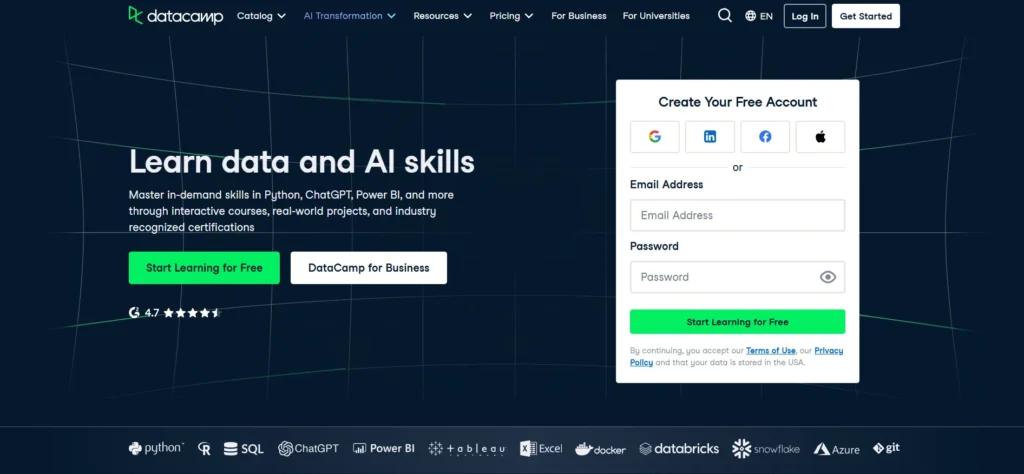
DataCamp, by contrast, is not a marketplace. It’s a curated platform designed specifically for one area of learning — data science and analytics. Its focus is narrow but deep.
The platform offers interactive lessons in Python, R, SQL, machine learning, data visualization, and statistics. Everything revolves around real-world data work. Instead of just watching lectures, learners spend most of their time coding directly in a browser-based workspace. This hands-on approach makes DataCamp particularly effective for people who prefer to learn by doing.
Because it’s curated rather than open, the quality of courses on DataCamp is consistent. The lessons are developed by in-house experts and data professionals. It’s a more structured and guided experience, best suited for people who want to build technical careers or develop practical data skills rather than browse a variety of unrelated subjects.
Course Offerings and Specialization
Udemy: Variety with Depth
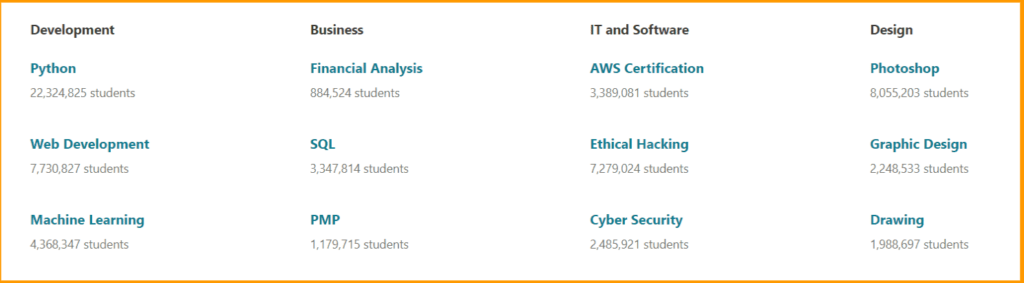
Udemy’s main strength is variety. It offers thousands of courses across almost every field — business, technology, marketing, health, personal development, music, and more. You can find both beginner and advanced courses in the same category, so you can start at your level and progress as you go.
If you’re curious and enjoy exploring different topics, Udemy is a great place to start. You could learn Excel one week, take a leadership course the next, and then pick up graphic design the following month. The possibilities are endless.
The downside is inconsistency. Since anyone can publish a course, some instructors may not have strong teaching skills or might not update their content regularly. For learners, that means spending some time reading reviews, checking ratings, and watching previews before purchasing.
In short, Udemy shines in its range but requires a bit of research to find the true gems. It’s ideal for people who want flexibility, breadth, and low-cost access to new knowledge without committing to a long-term learning plan.
DataCamp: Specialized and Structured Learning Paths
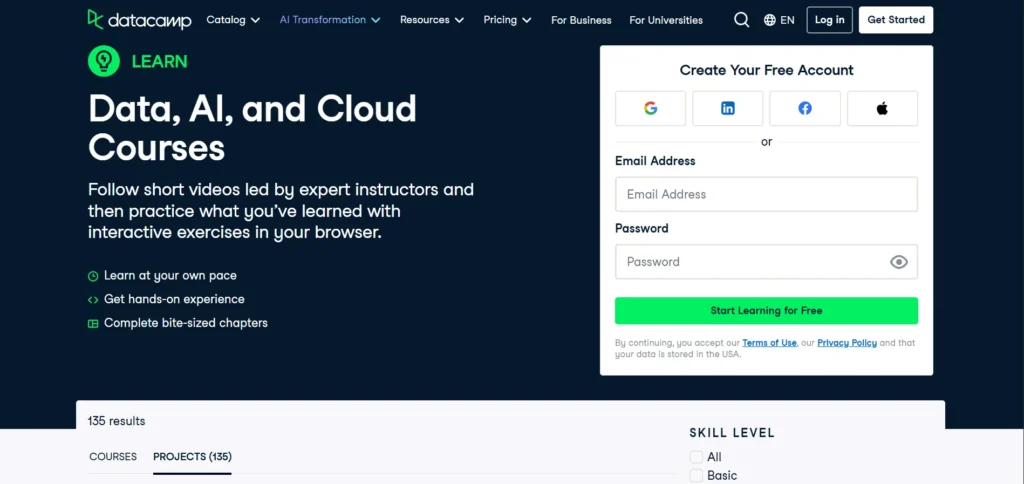
DataCamp takes the opposite approach. Instead of offering everything, it specializes in one powerful area — data science and analytics.
Courses are organized into structured learning paths called “Skill Tracks” and “Career Tracks.” Skill Tracks focus on particular abilities like data visualization or statistics, while Career Tracks combine several courses to prepare you for roles such as Data Analyst, Data Scientist, or Machine Learning Engineer.
Each path is built in a logical sequence, so you can progress from beginner to advanced without getting lost. This structure makes DataCamp especially appealing to people who prefer guided learning and a clear sense of direction.
However, the platform’s focus means it’s not for everyone. If your interests extend beyond data or programming — say into writing, marketing, or creative skills — you won’t find much variety here. It’s a niche platform, but within that niche, it offers impressive depth and quality.
Learning Style and Interactivity
Udemy: Mostly Passive Learning
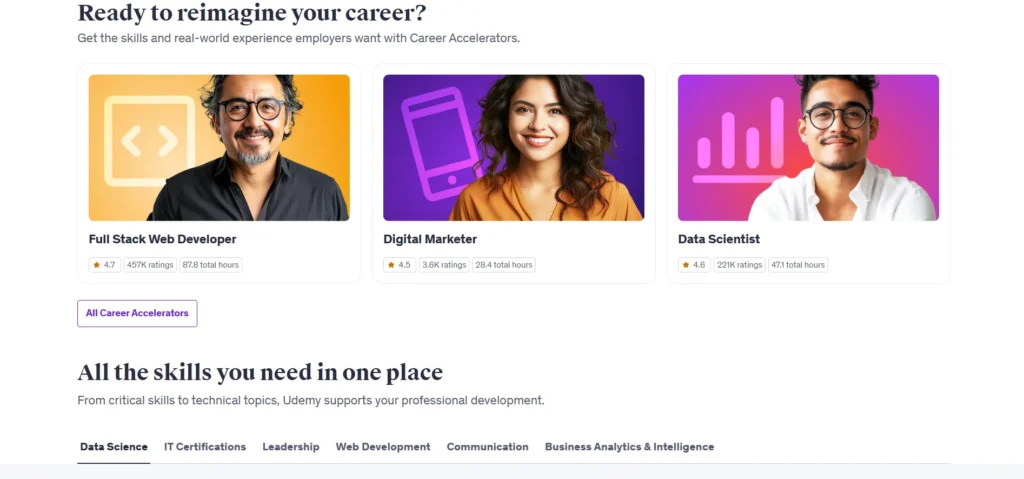
Udemy’s learning experience largely revolves around video lectures. In most cases, you watch the instructor explain concepts or demonstrate techniques, then apply them on your own time. Some courses include quizzes, downloadable resources, or short assignments, but the level of interactivity depends entirely on the instructor.
This format is familiar and comfortable for learners who like to absorb information visually. It works especially well for soft skills or conceptual subjects, where hands-on practice is less critical.
However, for technical skills such as coding or data analysis, the passive style may not be as effective. Since you have to set up your own environment and practice independently, it demands more self-discipline and initiative.
If you’re highly motivated and enjoy self-paced study, Udemy’s flexibility is a strength. You can watch lessons anytime, skip ahead, or revisit them years later since most courses come with lifetime access.
DataCamp: Interactive and Engaging
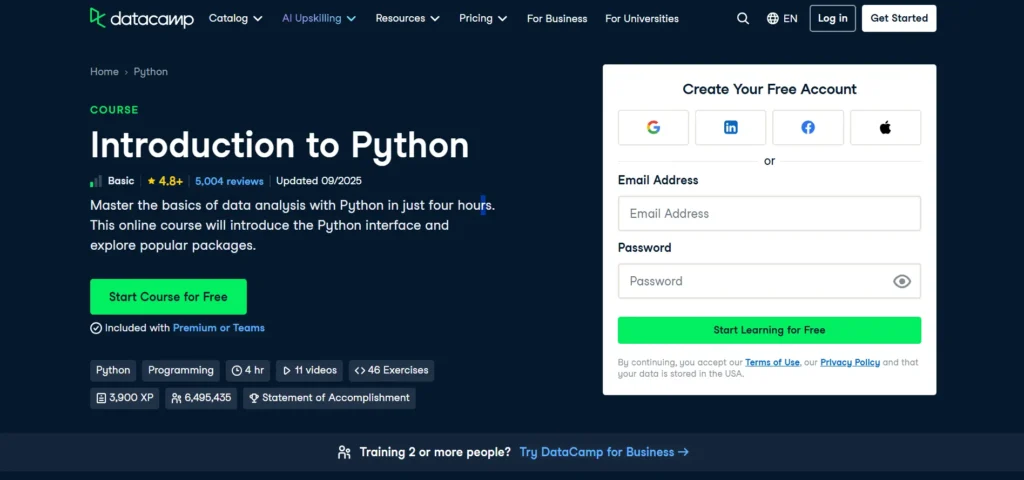
DataCamp’s format is far more interactive. Each lesson combines short explanations with live coding exercises. You write code directly in your browser and get instant feedback on your work. There’s no need to install software or configure tools — everything happens inside the platform.
This “learn by doing” approach is a big reason for DataCamp’s popularity. By constantly applying what you learn, you retain concepts better and gain confidence faster. The lessons are broken into bite-sized chunks, making it easy to practice a little every day without feeling overwhelmed.
In addition to lessons, DataCamp includes real projects where you apply your skills to solve actual data problems. These projects help build a portfolio you can showcase to employers.
For learners who thrive on practice and feedback, DataCamp’s interactivity is a huge advantage. It transforms passive learning into an active experience that feels both educational and fun.
Pricing Structure
Udemy: Pay-Per-Course Model
Udemy’s pricing is simple. You buy individual courses, and once purchased, you have lifetime access to them. Prices vary depending on the instructor and content, but the platform is known for its frequent discounts. During sales, many high-quality courses drop to very affordable prices.
This model gives you control. You pay only for what you want, and there are no ongoing fees. If you buy a few targeted courses over time, it’s often the most economical choice.
However, if you plan to take many courses regularly, the costs can add up. In that case, Udemy’s “Personal Plan,” which offers a subscription to a curated library, might make more sense. But most learners still prefer buying courses individually because of the lifetime access and flexibility.
DataCamp: Subscription-Based Model
DataCamp uses a subscription system. You pay monthly or annually for access to its full library of content, including all courses, tracks, projects, and practice exercises.
The subscription typically costs less per month when billed annually. Once subscribed, you can take as many courses as you want during that period. This works well for dedicated learners who plan to use the platform actively and progress through several tracks.
However, once your subscription ends, you lose access to the materials unless you renew. So, while it can be cost-effective for active learners, it might feel expensive if you only plan to dip in occasionally.
In short, Udemy is better for casual or selective learning, while DataCamp provides better value for consistent, long-term learners who want structured growth.
Certification and Career Support
Udemy: Certificates of Completion
When you complete a Udemy course, you receive a Certificate of Completion. This certificate simply confirms that you finished the course. It’s not accredited or officially recognized by universities or employers, but it can still be useful in showcasing your initiative and interest in continuous learning.
While the certificate itself may not carry formal weight, the real value lies in the skills you gain. Employers care more about what you can do than where you learned it. If you use Udemy courses to build practical expertise and a solid portfolio, the learning experience can still enhance your career prospects.
For example, completing a web development course and then building a few personal projects will demonstrate your capabilities far more effectively than a certificate alone.
DataCamp: Data Science-Focused Certifications and Career Support
DataCamp’s certifications are designed for a specific purpose: validating data-related skills. Unlike Udemy’s general certificates, DataCamp offers structured certification programs where learners complete projects, assessments, and practical tests before earning the credential.
These certificates are particularly helpful if you’re pursuing a data-focused role such as Data Analyst or Data Scientist. While they’re not the same as a university degree, they show that you can apply technical skills in a practical environment.
In addition, DataCamp offers career resources such as resume templates, portfolio guidance, and skill assessments. These tools can help you translate your learning into employable outcomes.
Between the two, DataCamp’s certificates are more career-oriented, but both platforms ultimately depend on how you apply the skills you learn.
User Interface and Accessibility
Udemy: Flexible and Easy to Navigate
Udemy’s interface is designed to be simple and intuitive. You can browse courses by category, skill level, or keyword, and the mobile app makes it easy to learn on the go. Once you purchase a course, you can stream lessons online or download them for offline viewing.
The platform also supports subtitles and multiple languages, making it accessible to learners around the world. Because you keep access forever, you can revisit your courses years later whenever you need a refresher.
Overall, Udemy’s interface feels straightforward and learner-friendly. It’s built for convenience rather than complexity, which suits its wide and varied audience.
DataCamp: Sleek and Data-Science-Oriented
DataCamp’s design is clean, modern, and focused entirely on data learning. The interface integrates lessons, coding exercises, progress tracking, and achievements in one space. Each lesson builds on the last, and your dashboard clearly shows where you are in a track.
The in-browser coding feature is especially convenient for beginners who don’t want to install programming tools. The layout is well structured, encouraging steady progress without distraction.
Accessibility is strong, though the platform relies on a stable internet connection since most activities are interactive. Overall, DataCamp offers a polished and motivating learning experience for technical learners.
Community and Support
Udemy: Large and Diverse Community
Because Udemy hosts millions of learners worldwide, its community is massive. Each course has its own Q&A section where students can ask questions and discuss concepts. Some instructors are very active in helping students, while others are less responsive, depending on their teaching style.
Outside of the platform, Udemy learners often form informal groups and forums to share insights. The size of the community makes it easy to find discussions or advice on almost any topic.
However, there’s no unified global community inside Udemy itself since each course operates independently. Support mostly depends on the individual instructor and the course you choose.
DataCamp: Specialized Support and Peer Interaction
DataCamp has a more focused and cohesive community. Because everyone is learning data science or analytics, discussions and peer interactions revolve around shared goals.
The platform also includes features like leaderboards, projects, and challenges, which help learners engage with one another. There are dedicated channels for support and feedback, and the structure encourages steady progress through collaboration and competition.
While smaller than Udemy’s audience, DataCamp’s community is tighter and more purposeful. It’s a space for like-minded learners to connect, share insights, and grow within the same discipline.
Which One Offers Better Value?
Determining which platform offers better value depends on your goals, learning style, and how much time you can commit.
If you want to explore different subjects, learn casually, or pick up new skills from time to time, Udemy offers better value. The pay-once model is budget-friendly, especially if you buy during sales. The lifetime access means you can return anytime without extra cost.
However, if you’re serious about developing a technical career in data or analytics, DataCamp provides better long-term value. The structured tracks, interactive learning, and certification programs make it more effective for skill-building. You pay more over time, but the consistent practice and focus on real-world projects can deliver stronger results.
In short:
- Choose Udemy if you want flexibility, diversity, and affordable access to broad learning.
- Choose DataCamp if you want depth, structure, and a clear career-oriented path in data science.
Conclusion
Both Udemy and DataCamp are powerful learning platforms, but they serve very different purposes.
Udemy is best for learners who crave flexibility and variety. Its marketplace model allows you to explore countless subjects and learn on your own schedule. It’s perfect for creative professionals, entrepreneurs, and lifelong learners who enjoy picking up new skills as needed.
DataCamp, on the other hand, is ideal for focused learners who want to master data-driven skills through structured practice. Its interactive lessons, guided tracks, and practical projects make it a great choice for anyone aiming to work in analytics or data science.
Ultimately, the best platform for you depends on your personal goals. If you want to learn a little bit of everything, go with Udemy. If you want to specialize and build a strong technical foundation, go with DataCamp.
Both can be excellent investments — the key is to choose the one that fits your learning style and ambitions.
FAQs
Can I try these platforms for free?
Yes. Udemy often offers free or heavily discounted courses. DataCamp provides free lessons and a limited trial version before subscribing.
Are the certificates recognized by employers?
Udemy’s certificates show completion but aren’t accredited. DataCamp’s certifications are more structured and relevant to data science roles but are still not equivalent to university degrees.
Which platform is cheaper?
Udemy is generally cheaper if you buy occasional courses. DataCamp’s subscription is cost-effective only if you use it actively and complete multiple tracks.
Can I learn non-data topics on DataCamp?
No. DataCamp focuses solely on data, programming, and analytics. For broader subjects, Udemy is the better option.
Which platform should a beginner choose?
Beginners who want to explore different areas can start with Udemy. Those who already know they want to build a career in data science will benefit more from DataCamp’s structured guidance.