
Online learning has completely changed the way people gain new skills and credentials. Whether you want to learn to code, build a business, or explore psychology, the right platform can make a huge difference. Two of the most recognized names in this space are Udemy and edX.
At first glance, they may seem similar — both offer online courses from instructors around the world. But dig a little deeper, and you’ll notice they serve different audiences and learning goals. This comparison looks closely at what each platform does best, where they fall short, and which one gives you the most value for your time and money.
1. Platform Overview
Udemy
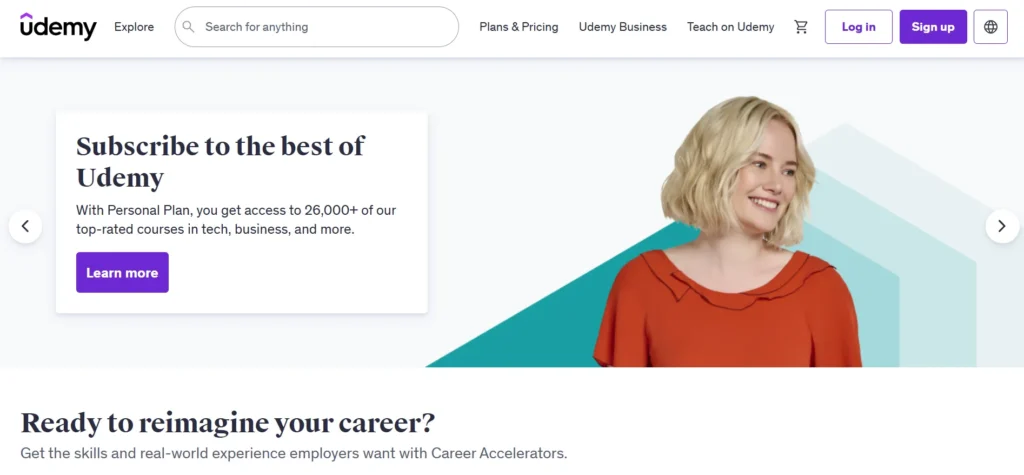
Udemy started in 2010 with a simple goal: to make learning accessible to anyone, anywhere. It’s essentially an open marketplace for online courses. That means almost anyone with expertise can create a course, upload videos, and share their knowledge with learners.
Because of this model, Udemy has built one of the largest libraries of courses in the world. There are hundreds of thousands of courses across nearly every category imaginable — from software development and marketing to music theory, fitness, and personal development.
The advantage is choice and flexibility. You can start any course immediately, learn at your own pace, and keep lifetime access to the material. But there’s a catch: with so many instructors, the quality can vary widely. Some courses are outstanding, created by professionals with years of experience. Others can feel rushed or outdated.
In short, Udemy is open, flexible, and huge — but it’s also inconsistent. You get what you put into it. If you research your instructors and read course descriptions carefully, you can find excellent value.
edX

edX launched in 2012 as a collaboration between Harvard and MIT. Unlike Udemy’s open marketplace, edX was designed as a more formal academic platform. It partners with universities and professional organizations to deliver high-quality, structured courses.
You’ll find individual courses, professional certificate programs, MicroMasters tracks, and even full online degrees. The content follows a university-style format with modules, graded assignments, and often peer discussions.
The goal of edX isn’t just to make learning accessible — it’s to provide credible, academically recognized education. Many of the institutions involved are world-renowned, so the content tends to reflect university-level standards.
While Udemy feels like an open marketplace where anyone can teach, edX feels like a digital campus where universities invite you to learn alongside their students.
2. Course Offerings and Quality
Udemy
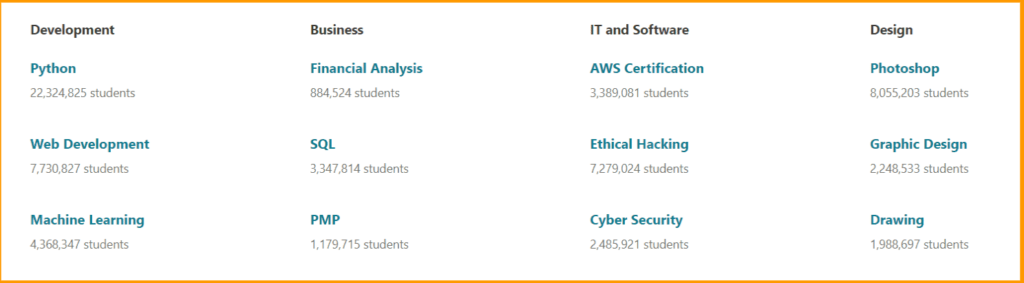
Udemy’s biggest selling point is its vast range of topics. You can find courses on highly technical fields like machine learning, programming, and cybersecurity, but also on practical and creative skills like photography, baking, and design.
The library grows every day because new instructors are constantly adding content. For self-starters, this is a dream. You can explore multiple interests or focus deeply on one skill without limits.
However, the same freedom that makes Udemy so large also affects its consistency. Because there’s no universal vetting process or academic review, the quality of instruction varies. Some instructors are seasoned professionals who teach with clarity and depth; others may not have teaching experience at all.
That said, Udemy’s rating system helps you separate great courses from mediocre ones. Learners can rate and review every course, so you can see how others experienced it before you buy.
Overall, Udemy’s quality depends on the instructor — not the platform. But for the price, there’s an abundance of valuable material, especially if you know how to choose carefully.
edX

edX focuses on structured, academically driven learning. The courses are created by universities and industry experts, meaning the content goes through professional development and academic quality checks.
You’ll find courses from top institutions around the world, covering subjects like data science, business management, health sciences, computer programming, and education. Each course follows a planned syllabus and often includes interactive assignments, quizzes, and discussions to test your understanding.
The overall experience is more polished and consistent than most open marketplaces. The videos are professionally produced, the pacing is deliberate, and the exercises often reflect real-world application.
While edX doesn’t have the endless variety that Udemy does, its strength lies in credibility and depth. It’s best for learners who prefer structured, academically sound material rather than quick or casual learning.
3. Certification and Accreditation
Udemy
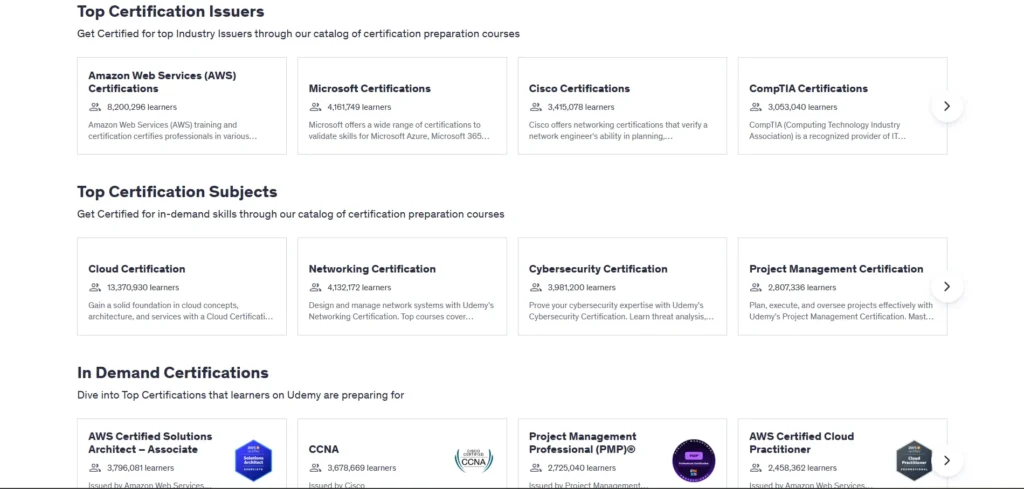
When you complete a Udemy course, you receive a certificate of completion. This certificate is a nice bonus, but it’s not accredited or officially recognized by employers or universities.
That doesn’t mean it has no value. Many learners use Udemy certificates to demonstrate initiative, self-learning, or skill acquisition. For example, completing a strong course in Excel, Python, or communication can show employers that you’re proactive about learning.
But it’s important to understand what a Udemy certificate represents: personal achievement rather than formal qualification. It won’t count toward a degree or professional licensing, and it’s unlikely to hold academic weight.
In essence, a Udemy certificate says, “I’ve learned this skill,” not “I’ve earned a formal credential.”
edX
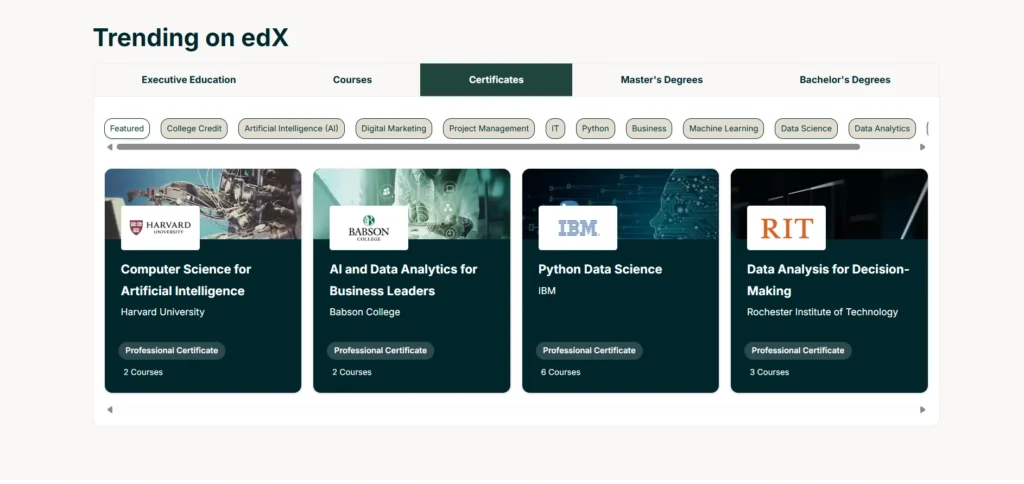
edX, on the other hand, offers several levels of certification that carry more weight. When you finish an edX course, you can often choose between auditing it for free or paying for a verified certificate.
A verified certificate includes your name, the institution offering the course, and verification that you’ve successfully completed all graded assignments. Because many edX partners are established universities, these certificates can be valuable additions to a résumé or LinkedIn profile.
Beyond single courses, edX also offers structured learning paths:
- Professional Certificate Programs, which prepare learners for specific careers.
- MicroMasters Programs, which can sometimes count as credit toward a master’s degree.
- Online Degrees, offered in collaboration with universities.
These credentials are far more formal than Udemy’s completion certificates. They can help demonstrate academic achievement or career advancement, especially if issued by a well-known university.
In short, Udemy’s certificates show effort and skill growth, while edX certificates can act as verifiable academic or professional credentials.
4. Pricing and Accessibility
Udemy
One of Udemy’s biggest attractions is its affordability. Most courses are priced individually, and frequent discounts mean you can often get high-quality material for the cost of a lunch. Once you purchase a course, you keep lifetime access, which allows you to revisit the material anytime.
This pricing model makes Udemy incredibly accessible to learners worldwide. There’s no subscription requirement or hidden fees. You simply pay for what you want to learn.
However, because instructors set their own prices, similar topics may vary in cost. Also, if you want to learn several subjects, buying multiple courses can add up.
Still, for short-term learning or hobby exploration, Udemy’s low entry price and instant access make it one of the most affordable learning options available.
edX
edX operates differently. Many of its courses can be audited for free, which means you can access the lectures and materials without paying. But if you want a verified certificate or to participate in graded assessments, you’ll need to pay a fee.
For professional certificates or MicroMasters programs, the costs are higher — typically hundreds or even thousands of dollars depending on the institution and subject. Full degree programs can cost significantly more, though still less than attending a university in person.
While the price tag may seem steep, you’re often paying for academic quality, instructor feedback, and verified credentials. For those seeking career advancement or formal recognition, the cost can be a worthwhile investment.
In terms of accessibility, edX offers financial aid for some programs and has global reach. However, some courses follow strict schedules or require prerequisites, making them less flexible than Udemy’s open format.
5. Learning Experience and Support
Udemy
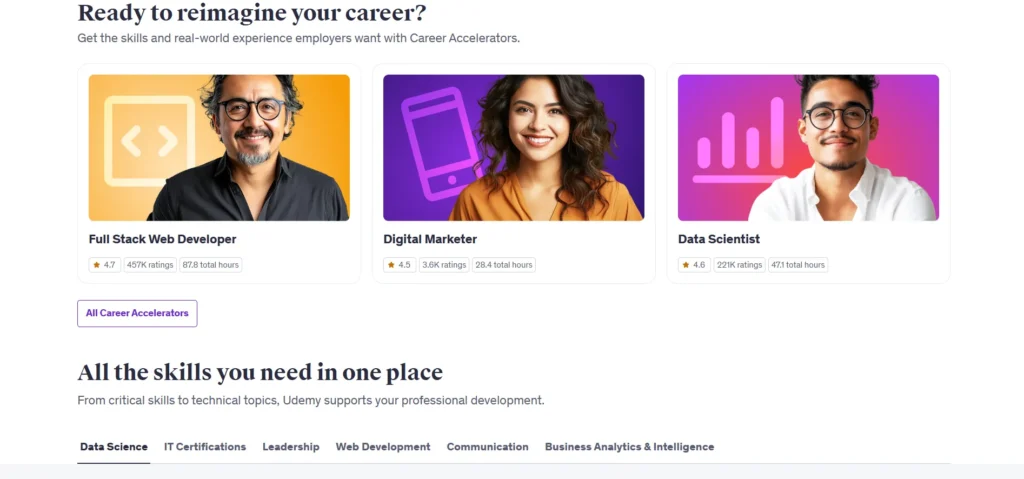
The Udemy experience is built around independence. You learn at your own pace, watch pre-recorded videos, and complete quizzes or projects on your own. This is ideal for self-motivated learners who enjoy flexibility.
Instructors can engage with students through Q&A forums, but interaction varies. Some instructors are active and responsive, while others may rarely reply. Because it’s a marketplace, community engagement depends heavily on the instructor’s approach.
The interface is clean, easy to navigate, and optimized for both desktop and mobile. You can download lessons for offline viewing and progress at whatever pace suits you.
However, Udemy doesn’t offer much personalized support or tutoring. There’s no formal grading or feedback system, which can make it harder to measure progress in complex subjects.
edX
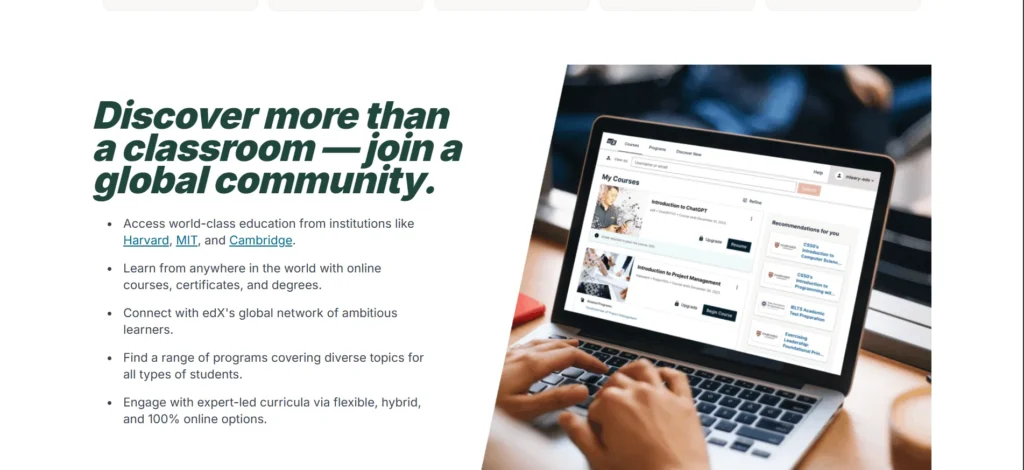
edX, in contrast, offers a more structured and interactive experience. Many courses have weekly modules, assignments, and assessments that follow a timeline. You’ll often find peer discussions, instructor-led sessions, and automated grading systems that mimic real academic environments.
This structure helps maintain focus and discipline. The courses are designed to encourage comprehension rather than passive watching.
edX also provides technical support and discussion forums moderated by course staff, making it feel more like a virtual classroom. While this may require more time commitment, it creates a sense of accountability that many learners find motivating.
If you prefer guided, collaborative learning, edX provides a richer, more academic environment.
6. Ideal Learner Profile
Udemy
Udemy suits learners who:
- Want to pick up new skills quickly and affordably.
- Prefer self-paced, on-demand learning.
- Are comfortable evaluating course quality on their own.
- Are focused on personal or professional skill growth rather than formal credentials.
- Enjoy learning casually, exploring hobbies, or upskilling for work.
It’s best for people who like autonomy and flexibility — freelancers, small business owners, professionals adding specific skills, or anyone exploring new interests.
edX
edX fits learners who:
- Want structured, university-level education online.
- Seek formal, verified credentials or degrees.
- Thrive in guided learning environments with schedules and assessments.
- Are willing to invest more time and money for depth and credibility.
- Plan to use their certificate or qualification for career or academic advancement.
It’s best for professionals preparing for career transitions, students pursuing credit-eligible programs, or anyone valuing academic rigor and recognition.
Conclusion
Both Udemy and edX have strong reasons to exist — but they serve different goals.
Udemy is like an enormous, flexible library. It’s affordable, convenient, and perfect for learning skills on your own schedule. The variety is unmatched, and the ability to start instantly makes it a great option for quick, practical learning. However, the quality varies, and its certificates don’t carry formal weight.
edX is more like an online university. It focuses on quality, structure, and credibility. The courses are well-designed, often created by world-class institutions, and the credentials can enhance your professional profile. The trade-off is cost and time commitment.
In essence:
- Choose Udemy for quick, affordable skill-building.
- Choose edX for academic or professional credentials that hold formal recognition.
If you’re learning for personal growth, Udemy’s flexible model is unbeatable. If you’re learning for career advancement or academic achievement, edX provides the structure and credibility you need.
FAQs
Can I get a job with a Udemy certificate?
A Udemy certificate shows initiative and effort, but it’s not officially accredited. It can strengthen your portfolio, but by itself, it’s not a recognized credential.
Does edX provide university credit?
Some edX programs, especially MicroMasters and degree tracks, offer academic credit that can count toward further studies. Always check each program’s details.
Which platform is cheaper?
Udemy is generally far cheaper per course. edX offers free audits but charges more for verified or professional certificates.
Which is better for beginners?
For beginners exploring new topics or skills, Udemy’s variety and low prices make it ideal. For structured academic learning, edX is better.
Do both platforms offer lifetime access?
Udemy provides lifetime access to purchased courses. edX access depends on the course type—many are time-limited, especially those with schedules or graded assessments.