
The way we learn has changed dramatically in recent years. With the rise of online education, anyone can now build new skills, explore creative passions, or even start a new career without stepping into a classroom.
Among the many learning platforms available today, two stand out for their popularity and very different approaches — Udemy and MasterClass. Both have loyal audiences and strong reputations, yet they cater to distinct kinds of learners.
Udemy is like a global marketplace for education. It offers thousands of affordable courses covering everything from business to coding to personal development. You can choose any topic, learn from independent instructors, and study entirely at your own pace. It’s a flexible, practical option for people who want to pick up new skills quickly or deepen their expertise in specific areas.
MasterClass, on the other hand, takes a completely different path. Rather than sheer variety, it focuses on quality, storytelling, and inspiration. Its classes are taught by accomplished figures — award-winning chefs, bestselling authors, filmmakers, athletes, and leaders — sharing their experiences in beautifully produced video lessons. It’s more about creative insight and mindset than step-by-step training.
This detailed comparison looks at both platforms side by side — from course selection and teaching style to pricing, flexibility, and overall value. Whether you’re a career-focused learner or a curious mind seeking inspiration, this guide will help you decide which platform fits your goals best.
Udemy Overview
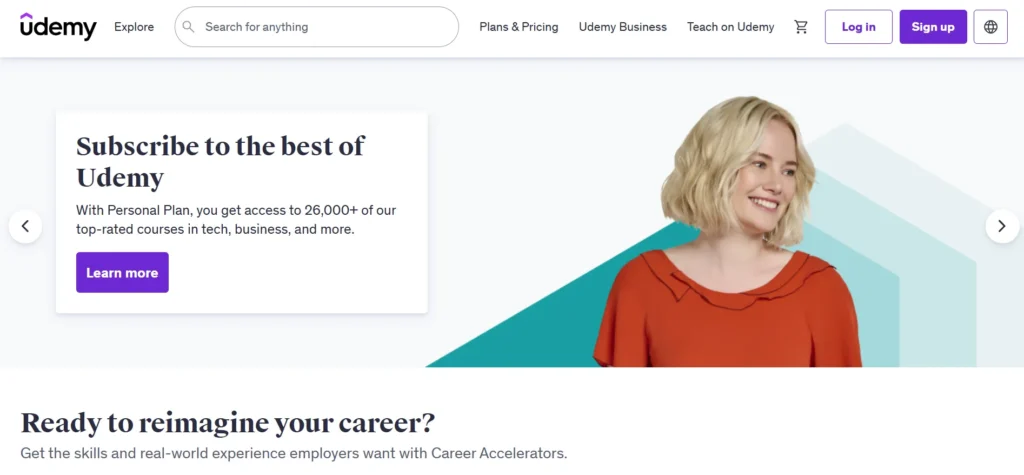
Udemy is one of the most extensive online learning marketplaces in the world, known for its massive range of affordable courses. It allows instructors from around the globe to create and sell lessons on almost any topic imaginable, from technology and business to personal growth and creative arts. Learners can purchase individual courses and gain lifetime access to them, which makes it easy to learn at their own pace without worrying about recurring fees.
The platform’s greatest strength lies in its accessibility and diversity. With millions of students and thousands of instructors, Udemy has become a go-to choice for people who want practical skills or professional development without formal education costs. Its interface is user-friendly, and most courses come with video lectures, downloadable resources, quizzes, and certificates of completion.
However, because anyone can publish a course, the quality varies from one instructor to another. Some classes are incredibly thorough and professional, while others may lack structure or depth. This means students need to check ratings, reviews, and previews before enrolling.
Despite that, Udemy remains highly popular for those seeking flexibility, affordability, and a wide selection of topics. It’s particularly useful for learners who prefer to pay once, study at their own pace, and focus on specific skills rather than general education.
MasterClass Overview
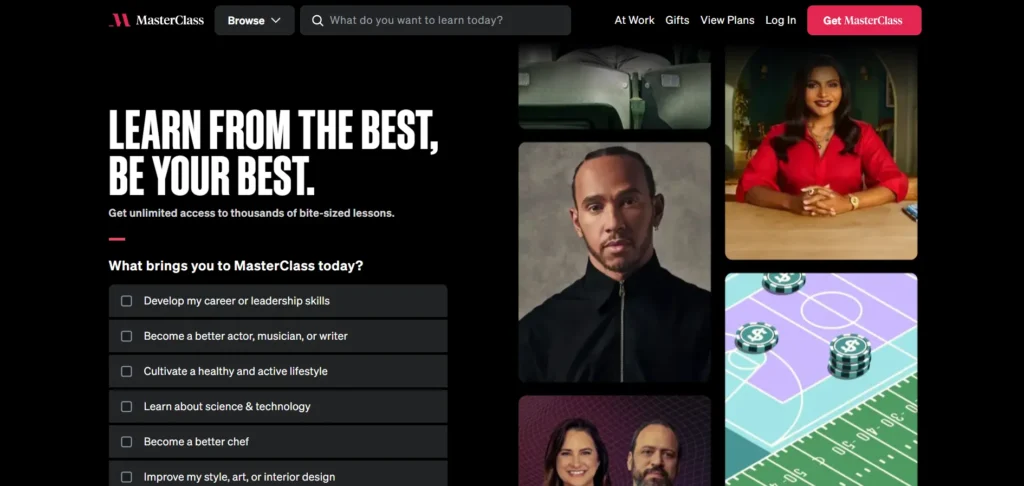
MasterClass is a premium online learning platform designed for people who want to be inspired and guided by some of the world’s best-known professionals. Instead of focusing on purely technical instruction, MasterClass emphasizes creativity, storytelling, and personal insight. Each course is taught by a renowned expert or celebrity, offering learners a rare opportunity to hear directly from accomplished individuals across industries like film, writing, music, design, sports, and business.
The learning experience feels cinematic. Lessons are beautifully produced, with high-definition video, elegant visuals, and well-structured storytelling that keeps learners engaged. Classes typically come with downloadable workbooks and are divided into short, easy-to-watch lessons. The platform operates on a subscription model, granting users unlimited access to its entire course library for as long as they maintain their membership.
While MasterClass excels at inspiration and big-picture understanding, it’s less suited for step-by-step technical training or career certifications. Courses focus more on mindset, process, and philosophy than hands-on application.
There are limited interactive features, such as quizzes or live sessions, which makes the platform ideal for self-motivated learners who enjoy exploring different fields and learning from the best. MasterClass is perfect for those who value creativity, storytelling, and personal growth over formal instruction.
1. Course Variety and Content
When choosing between Udemy and MasterClass, the first thing to consider is the range and style of their courses. Both offer rich learning opportunities but take very different paths. Udemy focuses on volume and variety, while MasterClass delivers curated, high-quality lessons designed to inspire and educate through storytelling.
Udemy: A Vast Selection for Every Learner
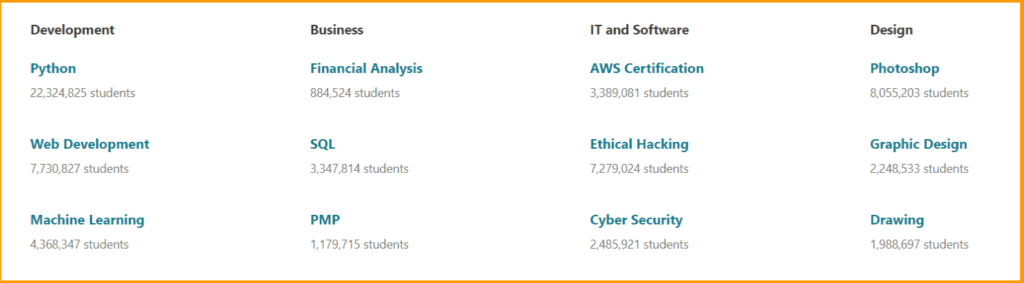
Udemy’s biggest strength is its scale. With hundreds of thousands of courses, it covers nearly every subject imaginable. Whether you want to learn coding, play the piano, build a website, manage finances, or understand psychology, there’s a course for it.
The variety allows learners to find content that fits very specific needs — whether you’re a beginner or already experienced. It’s also constantly expanding because instructors from around the world create and publish new courses daily.
However, this open-market approach has one drawback: quality can vary. Because anyone who meets basic criteria can upload a course, not all content is equally strong. Some are outstanding and deeply informative; others may be superficial or poorly structured.
The good news is that Udemy provides course previews, ratings, and student reviews so you can filter the best from the rest. If you take a little time to research, you can usually find excellent courses that fit your goals perfectly.
MasterClass: Curated, Expert-Driven Courses
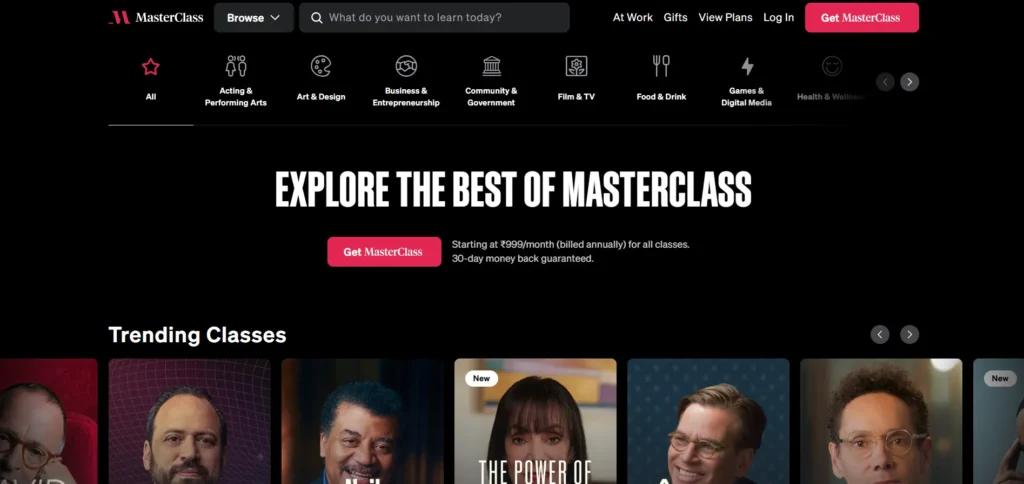
MasterClass, in contrast, focuses on curation over quantity. Rather than an open marketplace, it offers a hand-picked catalogue of courses taught by recognized experts. Each class is designed around the instructor’s personal philosophy, professional methods, and insights into their craft.
The result is fewer courses, but each one is meticulously produced. The lessons are high-quality, tightly scripted, and visually striking. Instead of a lecture-based structure, you get storytelling, behind-the-scenes context, and creative thought processes.
While you can learn a wide range of subjects — writing, cooking, business leadership, filmmaking, design, music, wellness, and more — the focus is more on inspiration and understanding than on step-by-step skill drills. This makes MasterClass ideal for creative thinkers and lifelong learners rather than those looking for technical certification or academic credit.
2. Instructors and Teaching Style
Instructors and teaching style can make or break an online learning experience. Both Udemy and MasterClass take very different paths here.
Udemy opens its doors to thousands of instructors worldwide, offering diverse teaching approaches, while MasterClass focuses on renowned experts who teach through storytelling, personal insights, and creative inspiration.
Udemy: A Wide Range of Instructors and Teaching Approaches
Because Udemy operates as an open platform, instructors come from all backgrounds — teachers, professionals, freelancers, entrepreneurs, and enthusiasts. This creates a broad spectrum of teaching styles. Some courses feel like polished, professional training programs, while others are casual and conversational.
This diversity has both advantages and disadvantages. On the plus side, you can find an instructor whose approach matches your learning style. Some use clear slides and structured exercises, while others focus on live demonstrations or examples.
On the downside, not every instructor is equally skilled at teaching. The platform’s strength in openness means quality control is partly in your hands as a learner. Checking reviews, preview videos, and ratings helps ensure you choose the right course.
Still, many instructors on Udemy are genuinely passionate about their subjects, and for motivated learners who can self-filter, this freedom is empowering. It offers access to thousands of voices and teaching perspectives you won’t find anywhere else.
MasterClass: Celebrity Experts and Storytelling
MasterClass instructors are world-renowned figures — actors, writers, athletes, chefs, musicians, and innovators who have reached the top of their fields. Their teaching style leans heavily on storytelling and personal experience.
You’re not just taught “how” to do something; you learn why it matters and how the instructor approaches their craft. The lessons feel intimate and reflective. They’re not about theory or exams but about mindset, creativity, and mastery.
The videos are short, beautifully filmed, and structured into cohesive lessons. The platform also provides downloadable workbooks with summaries and suggestions for practice. While it’s not hands-on training, it’s inspiring and insightful.
This teaching model works best for learners who want to understand how top performers think and operate. It’s less about “do this, then that,” and more about exploring how to apply expert thinking to your own work or passion.
3. Pricing Structure
When it comes to cost, the two platforms take very different routes. One charges per course purchase, meaning you pay only for what you want. The other works like a streaming subscription: one fee gives you full access to everything. We’ll compare what each model really means for your budget.
Udemy: Pay-Per-Course Model
Udemy’s pricing is flexible. You pay once per course and usually get lifetime access. Prices range widely, but frequent discounts make many courses affordable. Once you buy a class, you can return to it anytime — there are no expiration dates for most courses.
This pay-as-you-go model makes Udemy ideal for people who only need specific skills or want to learn one subject at a time. You can spend a small amount to gain access to high-value material and revisit it whenever you want.
However, since each course is separate, if you want to explore multiple topics, costs can add up. Another minor drawback is that, as a marketplace, refund experiences and instructor responsiveness vary from course to course.
Overall, it’s a great deal for those who like flexibility, ownership, and affordability. You pay once, learn at your pace, and keep what you buy.
MasterClass: Subscription-Based Pricing
MasterClass follows a subscription model. You pay an annual or monthly fee that gives you access to the entire library of courses. Once subscribed, you can explore any subject or instructor available on the platform.
The biggest advantage of this approach is variety. You can start with a course on leadership, then jump into cooking, creativity, or fitness — all under one plan. If you’re curious and like to explore, this is cost-effective.
However, if you only want one or two specific classes, the subscription model may feel less economical. You don’t own the individual courses; access ends if your subscription expires.
The pricing reflects its premium positioning — you’re paying not only for content but for production quality, famous instructors, and unlimited exploration. If you’re someone who regularly engages with online learning, the subscription can be worth every penny.
4. Learning Experience and Flexibility
Learning experience and flexibility play a big role in choosing an online platform. Both Udemy and MasterClass let you learn at your own pace, but they deliver it differently. Udemy focuses on self-paced skill building with lifetime access, while MasterClass offers cinematic, on-demand lessons centered on creativity and inspiration.
Udemy: Flexible and Self-Paced Learning
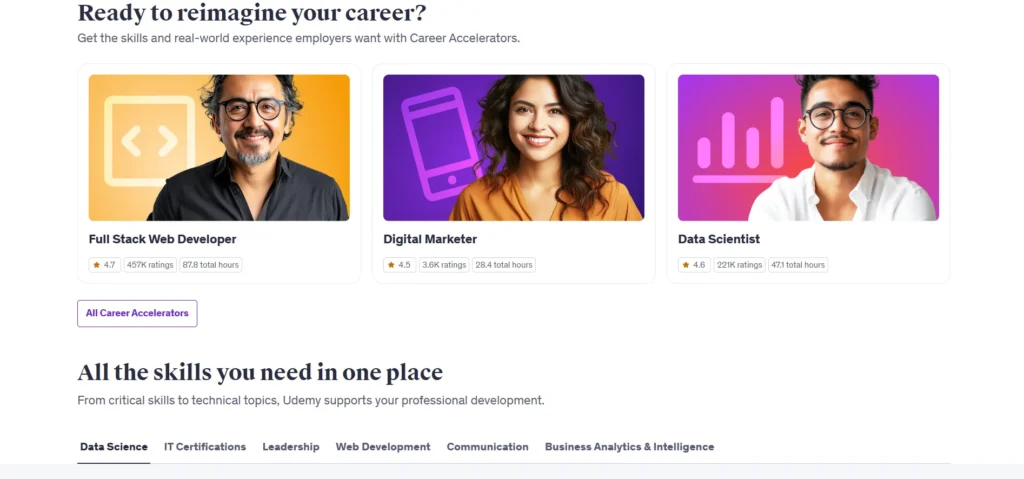
Udemy’s format revolves around flexibility. Once you enroll, you can start and stop lessons anytime, study from any device, and move entirely at your own pace.
There are no deadlines, so you can fit learning around your schedule. This makes it especially attractive for working professionals, students, and busy adults. Most courses also come with downloadable resources, quizzes, and sometimes assignments to test your understanding.
Another benefit is accessibility. You can watch lessons on desktop, tablet, or mobile, and some can even be downloaded for offline viewing. If you’re self-motivated and enjoy structured independence, this model gives you total control.
The only potential downside is the lack of consistent instructor interaction. Some instructors are highly responsive, while others rarely engage. As with much of Udemy, the experience depends on who you learn from.
Still, it’s one of the most flexible and convenient learning environments available online.
MasterClass: On-Demand, Cinematic Learning
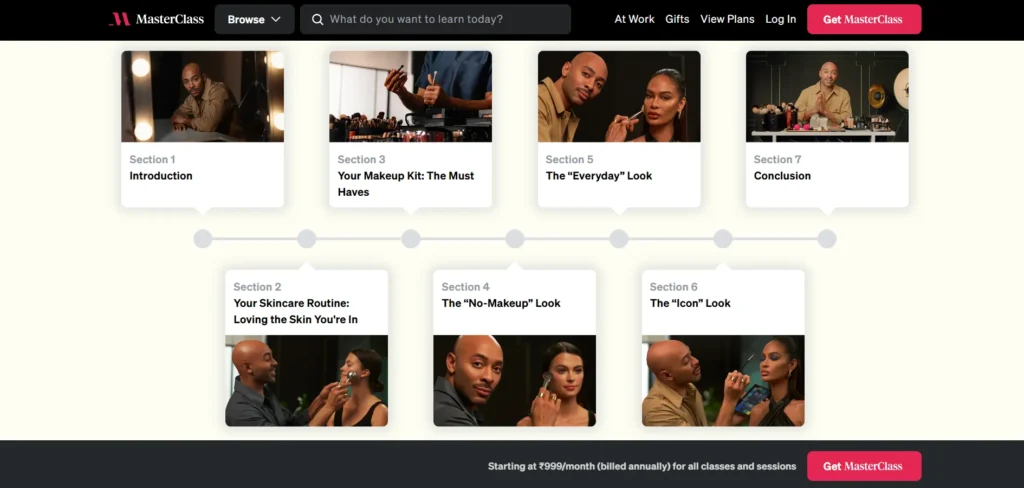
MasterClass offers a similar level of flexibility but with a very different feel. The lessons are pre-recorded, short, and cinematic — designed to be both educational and entertaining.
The videos can be streamed anytime, and many learners describe the experience as relaxing, like watching a beautifully made documentary. Lessons are divided into small segments, usually between 5 and 15 minutes each, so they’re easy to fit into short breaks or evenings.
Each class includes a workbook with key ideas, reflections, and optional activities to deepen understanding. However, the experience is primarily passive — you watch, reflect, and absorb rather than complete structured assignments or graded tasks.
This makes MasterClass more about inspiration, creativity, and perspective than direct practice. It’s a flexible, low-pressure learning experience perfect for those who want to learn at their own pace without feeling like they’re “in class.”
5. Certification and Career Advancement
In online learning, certification plays an important role in demonstrating skills and progress. While both Udemy and MasterClass offer valuable learning experiences, their approach to certification and career development differs significantly. Understanding what each provides helps you choose which platform best aligns with your professional goals and recognition needs.
Udemy: Certificates of Completion
When you finish a Udemy course, you receive a certificate of completion. While not officially accredited, it’s still a useful record of your progress and initiative. For self-learners or freelancers, it can demonstrate a commitment to professional growth.
However, employers and institutions typically don’t recognize Udemy certificates in the same way as formal credentials from universities or accredited platforms. If your goal is to build technical skills or knowledge for personal or freelance work, this isn’t a major issue. But if you need a qualification that carries formal recognition, Udemy may not fully meet that need.
The main takeaway: Udemy is excellent for building real-world skills, not for earning accredited credentials.
MasterClass: No Formal Certifications
MasterClass does not issue formal certificates. Its value lies in the insights, creativity, and motivation gained from learning directly from experts, not in formal recognition.
The platform isn’t designed for resume building or professional accreditation. Instead, it’s for learners who value personal growth, inspiration, and exposure to world-class talent.
If you’re looking to boost career prospects with an accredited certificate, MasterClass isn’t the right choice. But if you’re seeking creative stimulation or mentorship-style wisdom, it’s hard to beat.
6. Community and Support
Community and support play a big role in shaping your learning experience. Both Udemy and MasterClass handle this aspect differently. Udemy encourages interaction through Q&A sections, forums, and instructor feedback, while MasterClass focuses more on individual learning with limited peer or instructor engagement. Each offers distinct advantages depending on your learning style.
Udemy: Active Community and Support
Udemy provides community tools like course Q&A sections, discussion boards, and reviews. Many instructors actively respond to questions, and students often help one another.
This community aspect adds value — it allows you to connect with other learners, clarify doubts, and share experiences. The platform’s rating system also helps future learners make informed choices.
However, support quality varies depending on the instructor and course. Some courses have active forums and updates, while others remain static. Platform-wide support is adequate but can feel impersonal at times.
Overall, Udemy’s community is useful for practical learning and peer discussion, but not as interactive as platforms built around cohorts or mentorship.
MasterClass: Limited Community Interaction
MasterClass offers minimal community features. While the platform sometimes includes discussion spaces, the focus remains on individual, self-paced learning.
You won’t find instructor feedback or peer collaboration here. The experience is designed for introspection — watching, reflecting, and applying lessons personally rather than engaging in dialogue.
Customer support for technical issues or billing is available, but there’s no direct mentoring or live instruction. This simplicity is intentional; MasterClass is more about the content than the classroom dynamic.
If you prefer learning quietly and independently, that may be perfect. If you thrive on group discussion or feedback, you might find it lacking.
Conclusion: Which Platform Is Right for You?
Choosing between Udemy and MasterClass comes down to your learning goals. Both offer valuable experiences but in completely different ways. Udemy is ideal for practical, skill-focused learners who want flexibility and affordability, while MasterClass shines for those seeking creative inspiration, expert insights, and a more cinematic learning experience.
Choose Udemy If:
- You know exactly what skill you want to learn.
- You prefer paying once for a specific course rather than subscribing.
- You want practical, hands-on training for professional or personal development.
- You appreciate flexibility and lifetime access.
- You’re comfortable choosing your own instructors and filtering quality using reviews.
Choose MasterClass If:
- You want to learn from world-class experts and creative professionals.
- You enjoy visually rich, documentary-style lessons.
- You’re motivated by storytelling and inspiration rather than structured assignments.
- You plan to explore a variety of subjects under one subscription.
- You’re focused on personal growth, creativity, and mindset over formal credentials.
FAQs
Are Udemy and MasterClass accredited?
Neither is formally accredited. Udemy provides certificates of completion; MasterClass does not.
Which is better for professional skills?
Udemy is better suited for building job-related or technical skills. MasterClass is stronger for creativity and inspiration.
Which costs more?
Udemy is cheaper for single courses. MasterClass is more cost-effective if you plan to take multiple courses regularly.
Can I learn offline?
Yes. Both platforms allow offline viewing through their apps.
Which platform is best overall?
It depends on your goal. For career skills and technical learning, choose Udemy. For creativity, insight, and motivation, choose MasterClass.